
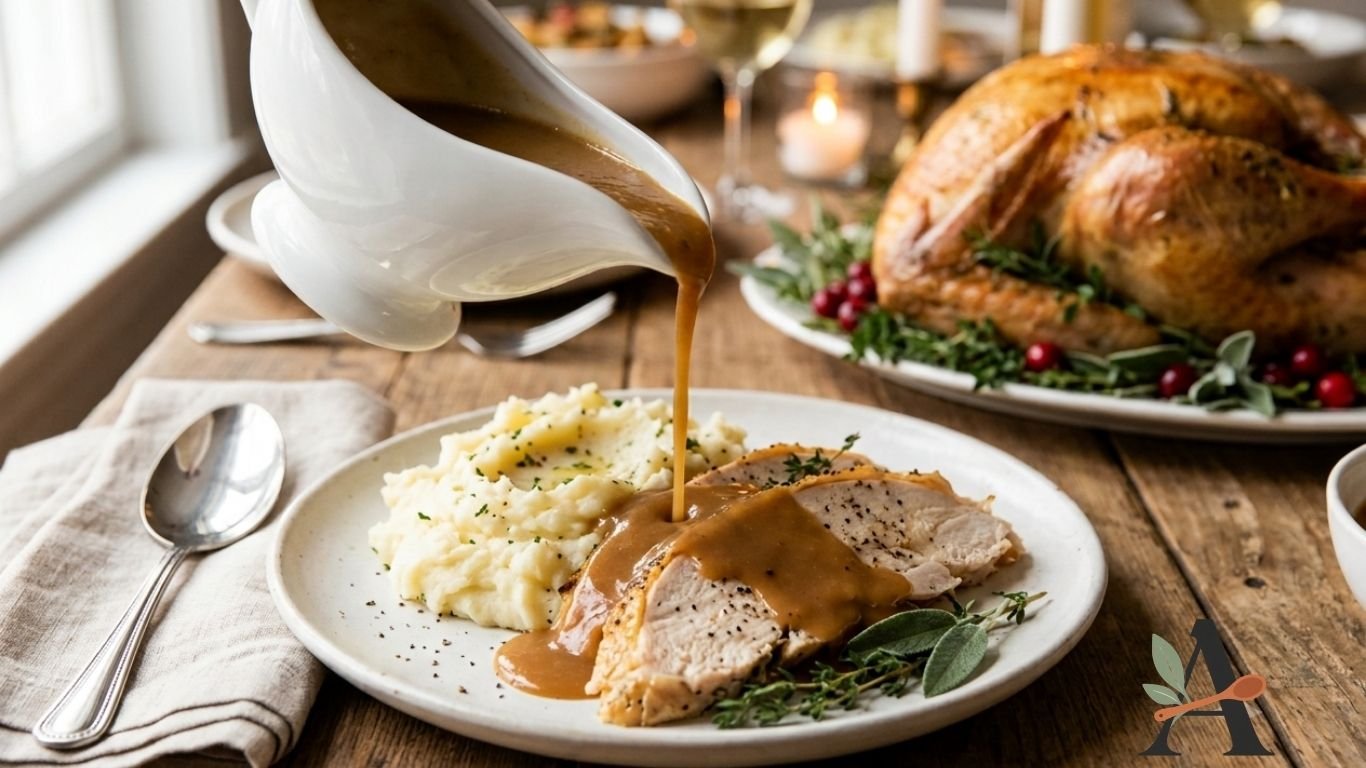
This turkey gravy from drippings is smooth, savoury and filled with the flavour of roasted turkey. It is made with pan drippings, flour and stock using a simple stovetop method.
The recipe can be adjusted according to the amount of liquid collected from your roasting pan. If there are not enough drippings, add turkey or chicken stock until you have the required amount.
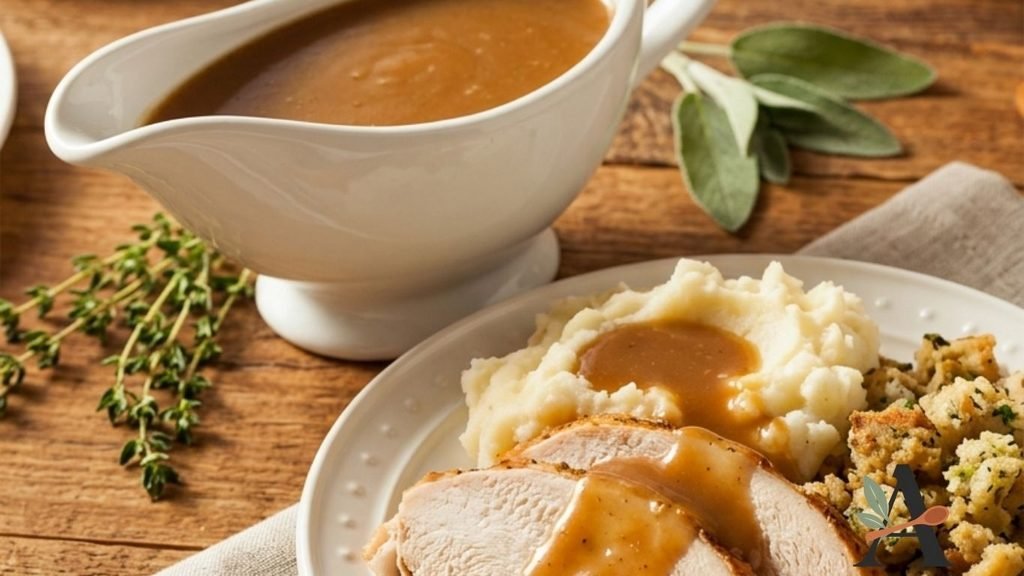
Serve the warm gravy over sliced turkey, mashed potatoes, stuffing and homemade dinner rolls.
Why You’ll Love This Turkey Gravy
- Uses flavourful turkey drippings.
- Smooth and rich without canned gravy.
- Ready in approximately 20 minutes.
- Easy to adjust for consistency.
- Can be strained for an extra-smooth finish.
- Suitable for Thanksgiving and Christmas.
- Includes an option without drippings.
- Can be prepared partly in advance.
- Delicious with turkey and mashed potatoes.
- Uses simple pantry ingredients.
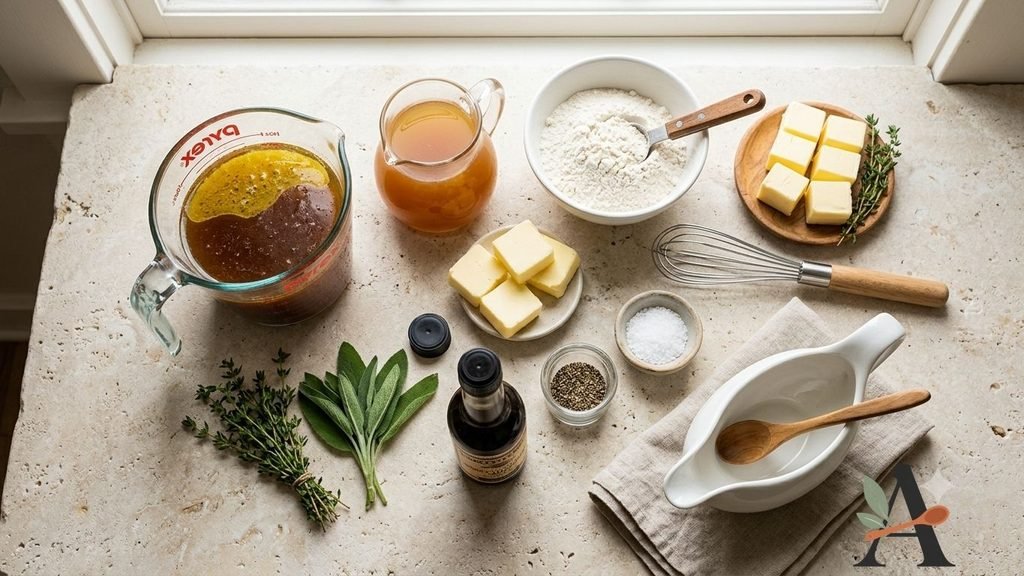
Ingredients You’ll Need
- ¼ cup turkey fat reserved from the drippings.
- ¼ cup all-purpose flour.
- 2 cups defatted turkey drippings and turkey or chicken stock combined.
- ½ teaspoon dried thyme, optional.
- ¼ teaspoon dried sage, optional.
- ¼ teaspoon garlic powder, optional.
- Salt, as needed.
- Ground black pepper, to taste.
- 1 teaspoon Worcestershire sauce, optional.
- 1 tablespoon unsalted butter, optional finishing ingredient.
Ingredient Notes
Turkey drippings: These include the browned juices and rendered fat collected in the roasting pan. Their salt level depends on how the turkey was seasoned or brined.
Turkey fat: The fat forms the base of the roux. If you do not collect enough, replace the missing quantity with butter.
Flour: Equal parts fat and flour create a roux that thickens the gravy.
Stock: Use turkey stock when available. Low-sodium chicken stock also works and makes it easier to control the seasoning.
Thyme and sage: These optional herbs complement traditional Thanksgiving flavours. Use them sparingly so they do not overpower the drippings.
Worcestershire sauce: Adds savoury depth and colour. Only a small amount is necessary.
Butter: Whisking in a small piece of butter at the end adds shine and richness.
How to Collect Turkey Drippings
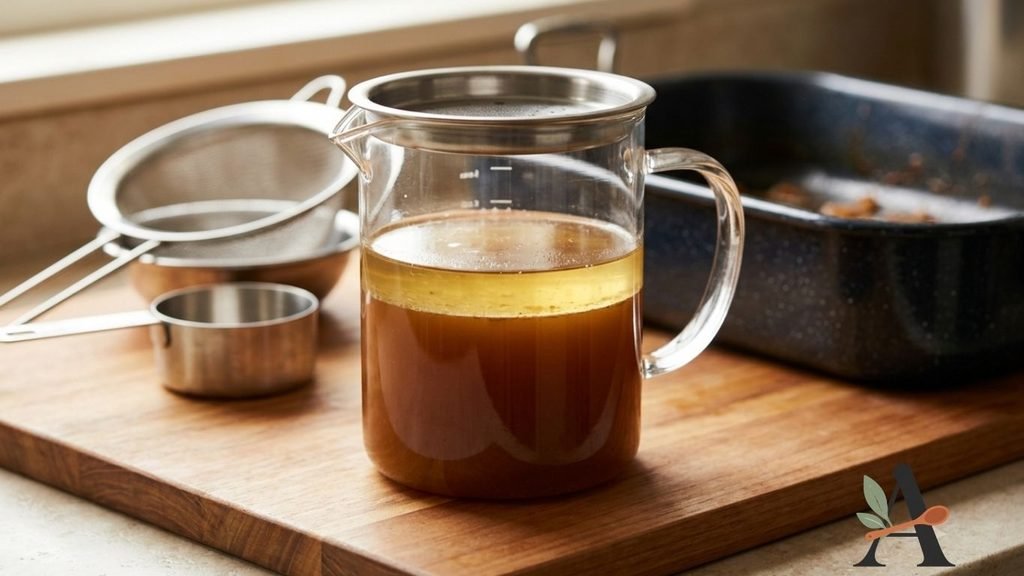
After removing the cooked turkey from the roasting pan, carefully pour the liquid through a fine-mesh sieve into a heatproof measuring jug or fat separator.
Allow the liquid to rest for several minutes.
The fat will rise to the top, while the darker juices settle underneath.
Separate and reserve:
- ¼ cup turkey fat for the roux.
- Enough pan juices and stock to make 2 cups of liquid.
If your turkey produced more liquid, save the remainder for reheating leftovers or making soup.
Do You Need to Remove the Fat?
Yes. Using all the roasting liquid without separating the fat can produce greasy gravy.
Reserve only the measured amount of fat required for the roux.
A fat separator is convenient, but you can also allow the liquid to settle in a measuring jug and skim the fat from the surface with a spoon.
How to Make Turkey Gravy From Drippings
Step 1: Measure the Drippings
Separate the turkey fat from the pan juices.
Measure ¼ cup of fat.
Combine the remaining juices with enough turkey or chicken stock to make two cups of liquid.
Taste a small amount of the liquid before adding salt because drippings from a brined turkey may already be salty.
Step 2: Make the Roux
Place the measured turkey fat in a medium saucepan over medium heat.
If you do not have a full ¼ cup, add enough unsalted butter to make up the difference.
Sprinkle in the flour.
Whisk continuously for approximately 2–3 minutes, until the mixture is smooth and lightly golden.
Cooking the roux removes the raw flour taste.
Step 3: Add the Liquid Gradually
Slowly pour approximately ½ cup of the drippings and stock mixture into the roux while whisking continuously.
The mixture will initially become very thick.
Continue adding the liquid in small amounts, whisking until smooth after each addition.
Once approximately half has been incorporated, the remaining liquid can be added more steadily.
Step 4: Add the Seasonings
Add the optional thyme, sage, garlic powder and Worcestershire sauce.
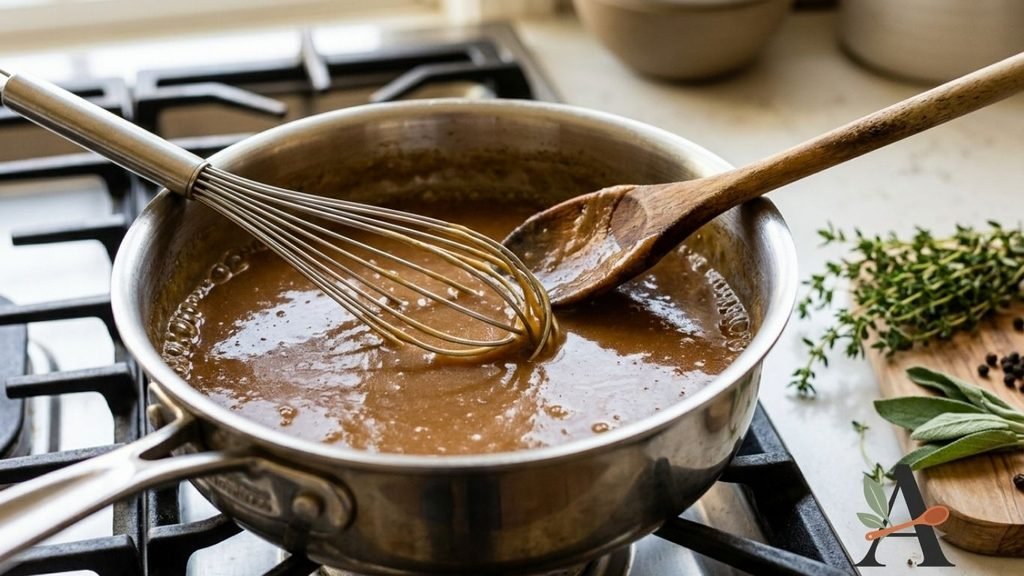
Bring the gravy to a gentle simmer over medium heat.
Avoid a rapid boil.
Step 5: Simmer Until Thickened
Cook for approximately 5–8 minutes, whisking frequently.
The gravy is ready when it coats the back of a spoon but still pours easily.
It will continue to thicken slightly as it cools.
Step 6: Taste and Adjust
Taste the gravy before adding salt.
Add black pepper and additional salt only when necessary.
If the gravy tastes too intense or salty, dilute it with unsalted stock.
Step 7: Strain and Finish
For an especially smooth gravy, pour it through a fine-mesh sieve into a clean saucepan or gravy boat.
Whisk in the optional tablespoon of butter for additional richness and shine.
Serve warm.
How Thick Should Turkey Gravy Be?
Properly thickened gravy should coat the back of a spoon while remaining easy to pour.
Run a finger through the gravy coating the spoon. If the line remains visible, the sauce has generally thickened sufficiently.
Remember that gravy becomes thicker as it cools. Remove it from the heat before it reaches an overly heavy consistency.
Tips for Smooth, Lump-Free Gravy
Use Equal Amounts of Fat and Flour
A ratio of approximately ¼ cup fat to ¼ cup flour creates enough roux for two cups of liquid.
Cook the Flour
Whisk the flour with the fat for several minutes to remove its raw flavour.
Add Liquid Slowly
The first additions are the most important. Whisk each small amount completely into the roux before adding more.
Use Warm Liquid
Warm drippings and stock generally incorporate more easily than very cold liquid.
Whisk Continuously
Continuous whisking prevents pockets of dry flour from forming.
Simmer Gently
A gentle simmer allows the gravy to thicken without scorching.
Strain Before Serving
A fine-mesh sieve removes small lumps and pieces of herbs or roasted ingredients.
How to Fix Turkey Gravy
Gravy Is Too Thick
Whisk in warm stock one tablespoon at a time until it reaches the desired consistency.
Gravy Is Too Thin
Allow it to simmer for several additional minutes.
Alternatively, combine one tablespoon of softened butter with one tablespoon of flour to form a smooth paste. Whisk small amounts into the simmering gravy until it thickens.
Gravy Is Lumpy
Whisk vigorously or use an immersion blender carefully.
For the smoothest result, pour the gravy through a fine-mesh sieve.
Gravy Is Too Salty
Add unsalted stock.
A small amount of unsalted butter or cream can soften the flavour, but dilution is the most reliable method.
Gravy Tastes Bland
Add salt gradually, along with black pepper, Worcestershire sauce or a small quantity of concentrated stock.
Gravy Looks Greasy
Skim excess fat from the surface or transfer it to a fat separator before reheating.
Turkey Gravy Without Drippings
You can make gravy even when no pan drippings are available.
Use:
- ¼ cup unsalted butter.
- ¼ cup all-purpose flour.
- 2 cups turkey or chicken stock.
- Thyme, sage, garlic powder, salt and pepper.
Melt the butter and whisk in the flour. Cook for 2–3 minutes, then gradually add the stock.
For additional roasted flavour, use high-quality turkey stock or add a small amount of turkey base according to its package instructions.
Easy Turkey Gravy Variations
Herb Turkey Gravy
Add finely chopped fresh sage, thyme or rosemary. Begin with a small amount because fresh herbs can be strong.
Creamy Turkey Gravy
Add two or three tablespoons of heavy cream after the gravy has thickened.
Mushroom Turkey Gravy
Cook sliced mushrooms in butter until browned before preparing the roux.
Onion Turkey Gravy
Cook finely chopped onion or shallot until soft before adding the flour.
Giblet Gravy
Prepare and finely chop the cooked turkey giblets, then stir them into the finished gravy. Follow safe handling and cooking practices.
Gluten-Free Turkey Gravy
Use a suitable gluten-free flour blend or thicken the gravy with a cornstarch slurry. The method and texture will differ from flour-based gravy.
Can You Make Turkey Gravy Ahead?
Yes. Prepare the gravy without pan drippings using butter and stock up to three days in advance.
Refrigerate it in an airtight container.
After roasting the turkey, reheat the prepared gravy and whisk in the defatted pan juices. Adjust the consistency with additional stock if necessary.
This method provides roasted flavour while reducing last-minute preparation.
How to Keep Gravy Warm
Keep the gravy in a covered saucepan over the lowest possible heat.
Whisk it occasionally and add a small amount of warm stock if it becomes too thick.
For longer holding periods, place the gravy in a heatproof bowl over a saucepan of gently simmering water.
Do not leave gravy at room temperature for more than two hours.
How to Store Leftover Gravy
Allow the gravy to cool slightly and transfer it to a shallow airtight container.
Refrigerate within two hours and use within 3–4 days.
The gravy will become firm when chilled but will loosen again during reheating.
Can You Freeze Turkey Gravy?
Yes. Flour-thickened turkey gravy generally freezes well.
Transfer the cooled gravy to a freezer-safe container, leaving a little room for expansion.
Freeze for up to three months.
Thaw overnight in the refrigerator and whisk thoroughly while reheating.
How to Reheat Turkey Gravy
Transfer the gravy to a saucepan.
Warm it over medium-low heat while whisking frequently.
Add stock or water one tablespoon at a time if it is too thick.
Bring leftover gravy to a gentle simmer and ensure it is thoroughly hot before serving.
Frequently Asked Questions
What are turkey drippings?
Turkey drippings are the rendered fat, juices and browned flavourful liquid collected in the roasting pan.
How much flour should I use for two cups of gravy?
Use approximately ¼ cup of flour with ¼ cup of fat for a medium-thick gravy.
Why is my turkey gravy lumpy?
The liquid may have been added too quickly or the mixture may not have been whisked continuously. Strain or blend the gravy to correct it.
Can I make gravy without turkey fat?
Yes. Replace the turkey fat with an equal quantity of unsalted butter.
Why is my gravy too salty?
Drippings from a brined or heavily seasoned turkey can contain considerable salt. Dilute the gravy with unsalted stock.
Can I use chicken stock?
Yes. Low-sodium chicken stock is a suitable alternative to turkey stock.
How do I make dark turkey gravy?
Use well-browned pan drippings and cook the roux until lightly golden. Avoid burning the flour merely to create a darker colour.
Can I prepare turkey gravy the day before?
Yes. Prepare a butter-and-stock gravy ahead, then add the turkey drippings when reheating it.
What to Serve With Turkey Gravy
Serve this gravy with:
- Roast turkey.
- Creamy mashed potatoes.
- Classic Thanksgiving stuffing.
- Homemade dinner rolls.
- Green bean casserole.
- Sweet potato casserole.
- Roast chicken.
- Turkey meatballs.
- Open-faced turkey sandwiches.
- Leftover Thanksgiving bowls.
For a complete holiday dinner, serve it with Classic Thanksgiving Stuffing, Green Bean Casserole From Scratch, Homemade Cranberry Sauce and Creamy Mashed Potatoes.
Turkey Gravy Recipe Card
Preparation time: 10 minutes
Cooking time: 15 minutes
Total time: Approximately 25 minutes
Servings: 8
Course: Sauce
Cuisine: American
Method: Stovetop
Ingredients
- ¼ cup reserved turkey fat.
- ¼ cup all-purpose flour.
- 2 cups defatted turkey drippings and stock combined.
- ½ teaspoon dried thyme, optional.
- ¼ teaspoon dried sage, optional.
- ¼ teaspoon garlic powder, optional.
- Salt, as needed.
- Black pepper, to taste.
- 1 teaspoon Worcestershire sauce, optional.
- 1 tablespoon unsalted butter, optional.
Instructions
- Strain the turkey drippings into a heatproof container.
- Allow the fat to separate from the pan juices.
- Measure ¼ cup of turkey fat.
- Combine the remaining juices with enough stock to make two cups.
- Heat the turkey fat in a medium saucepan.
- Add butter if there is not enough fat.
- Whisk in the flour.
- Cook for 2–3 minutes until lightly golden.
- Gradually add the drippings and stock while whisking.
- Add the optional herbs and Worcestershire sauce.
- Simmer for 5–8 minutes until thickened.
- Taste before adding salt.
- Adjust the consistency with additional stock if required.
- Strain for an extra-smooth texture.
- Whisk in optional butter and serve warm.
Recipe Notes
- Taste the drippings before adding salt.
- Use low-sodium stock whenever possible.
- Add liquid gradually to prevent lumps.
- Gravy thickens as it cools.
- Replace missing turkey fat with butter.
- Test the complete recipe using your turkey preparation before confirming the precise seasoning and yield.