

These soft Christmas sugar cookies have tender centres, lightly golden edges and a rich vanilla-butter flavour. The chilled dough rolls smoothly and holds festive shapes while baking.
Use Christmas trees, stars, snowflakes or gingerbread-person cutters to create a colourful holiday assortment. Once cool, the cookies can be decorated with simple icing, sprinkles or melted chocolate.
Prepare the dough ahead for Christmas parties, family decorating activities, cookie exchanges or homemade gift boxes.
Why You’ll Love These Christmas Sugar Cookies
- Soft, tender texture.
- Rich vanilla-butter flavour.
- Holds cut-out shapes.
- Smooth dough that is easy to roll.
- Suitable for many cookie cutters.
- Easy to prepare ahead.
- Freezer-friendly.
- Fun for family decorating.
- Ideal for Christmas parties.
- Attractive in holiday cookie boxes.
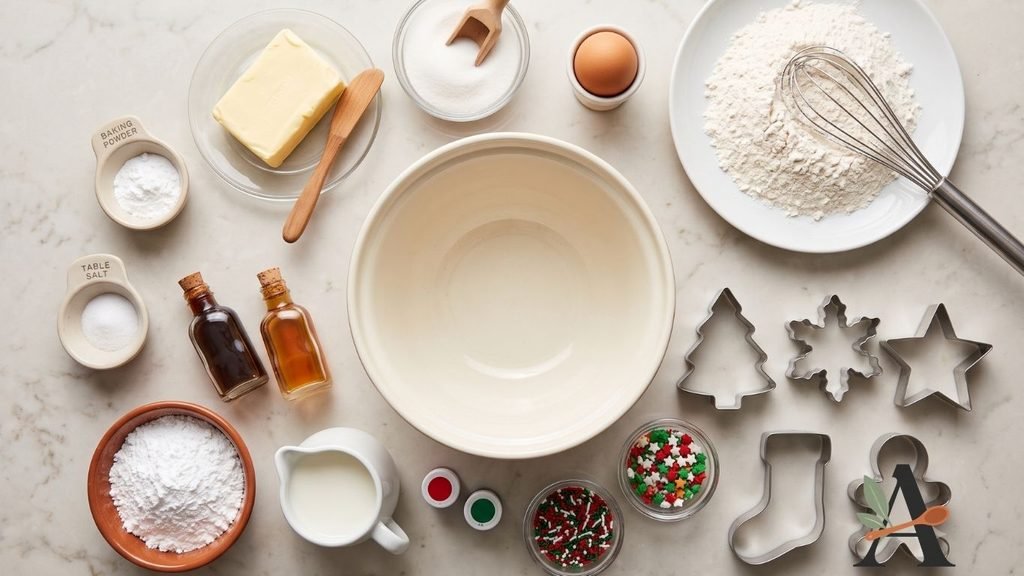
Ingredients You’ll Need
For the Sugar Cookies
- ¾ cup unsalted butter, softened.
- ¾ cup granulated sugar.
- 1 large egg, at room temperature.
- 2 teaspoons pure vanilla extract.
- ¼ teaspoon almond extract, optional.
- 2¼ cups all-purpose flour.
- ½ teaspoon baking powder.
- ½ teaspoon salt.
For the Simple Icing
- 2 cups powdered sugar, sifted.
- 2–3 tablespoons milk.
- 1 tablespoon light corn syrup, optional.
- ½ teaspoon vanilla extract.
- Gel food colouring, optional.
- Christmas sprinkles, optional.
Ingredient Notes
Butter: Use softened butter that still feels slightly cool. Melted or greasy butter can make the cookies spread.
Sugar: Granulated sugar creates a classic sugar-cookie texture without adding excess moisture.
Egg: Provides structure and helps bind the dough. A room-temperature egg combines more smoothly with the butter.
Vanilla: Use pure vanilla extract for a warm, rounded flavour.
Almond extract: A small amount gives the cookies a bakery-style flavour. Omit it when serving anyone with an almond allergy.
Flour: Measure accurately. Too much flour makes the dough crumbly and the baked cookies dry.
Baking powder: Provides a small amount of lift without making the cookies overly puffy.
Powdered sugar: Sift it before making the icing to prevent visible lumps.
Corn syrup: Optional, but it helps the icing dry with a smoother, slightly shinier finish.
How Soft Should the Butter Be?
The butter should indent when pressed gently but should not look shiny, melted or greasy.
Butter that is too cold will not combine evenly with the sugar. Butter that is too warm can cause the dough to spread and lose its shape.
For consistent results, allow refrigerated butter to soften gradually at room temperature.
How to Make Soft Christmas Sugar Cookies
Step 1: Combine the Dry Ingredients
Place the flour, baking powder and salt in a medium bowl.
Whisk thoroughly so the baking powder and salt are evenly distributed.
Set the bowl aside.
Step 2: Cream the Butter and Sugar
Place the softened butter and granulated sugar in a large mixing bowl.
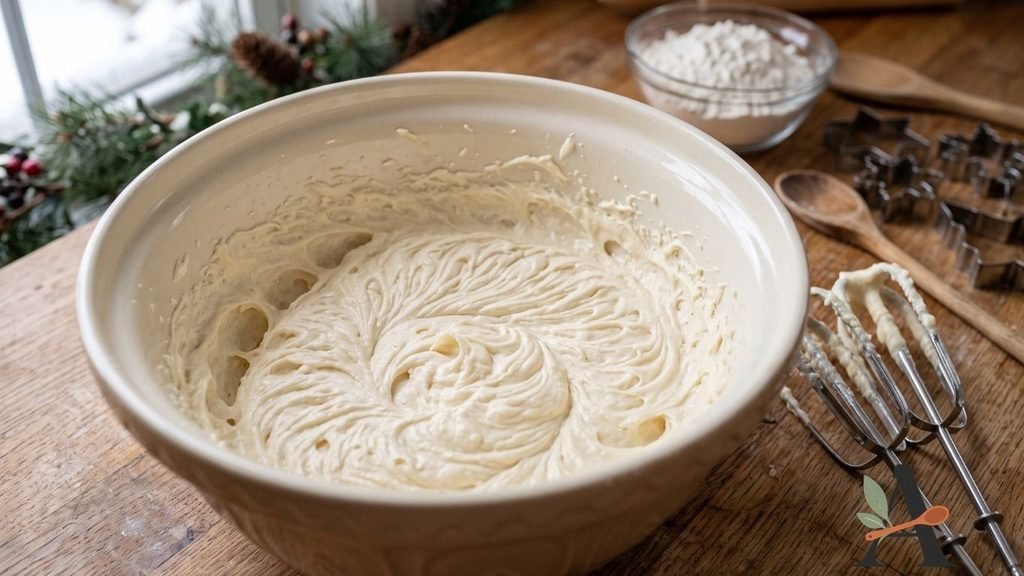
Beat with an electric mixer on medium speed for approximately 2–3 minutes, until smooth and slightly lighter.
Avoid beating for too long because excessive air can encourage spreading.
Step 3: Add the Egg and Flavourings
Add the egg, vanilla extract and optional almond extract.
Beat until smooth, scraping the sides and bottom of the bowl as necessary.
Step 4: Add the Dry Ingredients
Add the flour mixture gradually.
Mix on low speed until the dough forms moist clumps and no dry flour remains.
Avoid overmixing once the dough comes together.
Step 5: Divide and Flatten the Dough
Divide the dough into two equal portions.
Shape each portion into a flat disc approximately one inch thick.
Wrap the discs tightly in reusable food wrap or parchment paper.
Flattening the dough helps it chill evenly and makes it easier to roll later.
Step 6: Chill the Dough
Refrigerate the dough for at least 1–2 hours.
The dough should feel firm but remain flexible enough to roll without cracking.
It may also be refrigerated overnight.
Step 7: Prepare the Oven and Baking Sheets
Preheat the oven to 350°F.
Line light-coloured baking sheets with parchment paper or silicone baking mats.
Allow cold baking sheets to remain at room temperature. Do not place dough on a pan that is still warm from a previous batch.
Step 8: Roll the Dough
Place one chilled dough disc on a lightly floured surface.
Dust the rolling pin and top of the dough with a small amount of flour.
Roll the dough to an even thickness of approximately ¼ inch.
Turn the dough occasionally while rolling to ensure it is not sticking.
Step 9: Cut Out the Cookies
Dip the edges of each cookie cutter lightly in flour.
Cut the shapes as closely together as possible.
Transfer them carefully to the prepared baking sheets, leaving approximately one inch between each cookie.

Step 10: Chill the Cut-Out Shapes
For especially clean edges, place the baking sheet in the refrigerator for approximately 10–15 minutes before baking.
This is particularly useful when the kitchen is warm or the dough has softened during rolling.
Step 11: Bake the Cookies
Bake one tray at a time for approximately 8–11 minutes, depending on the size and thickness of the shapes.
The cookies are ready when:
- The surfaces look dry and set.
- The centres no longer appear wet.
- The lower edges are just beginning to turn pale golden.
- The shapes remain stable when the pan is moved.
Avoid waiting for the tops to become golden because this can produce crisp rather than soft cookies.
Step 12: Cool Completely
Leave the cookies on the baking sheet for approximately five minutes.
Transfer them carefully to a wire rack.
Allow them to cool completely before adding icing.
How to Make Simple Sugar-Cookie Icing
Step 1: Combine the Ingredients
Place the sifted powdered sugar in a medium bowl.
Add two tablespoons of milk, the optional corn syrup and vanilla extract.
Whisk until smooth.
Step 2: Adjust the Consistency
Add additional milk a few drops at a time until the icing is thick but spreadable.
For outlining, keep the icing relatively thick.
For flooding the centres, thin a portion with several additional drops of milk.
Step 3: Add Colour
Divide the icing between small bowls.
Tint each portion with gel food colouring.
Gel colour is preferable to liquid colouring because it adds strong colour without significantly thinning the icing.
Step 4: Decorate the Cookies
Transfer the icing to piping bags or small food-storage bags with one corner removed.
Outline each cookie and allow the border to set briefly.
Fill the centre with slightly thinner icing and guide it towards the edges with a toothpick.
Add sprinkles while the icing is still wet.
Step 5: Allow the Icing to Set
Arrange the decorated cookies in a single layer.
Allow the icing to dry completely before stacking or packaging them.
Drying time depends on the icing consistency, thickness and room humidity.
Tips for Sugar Cookies That Hold Their Shape
Measure the Flour Accurately
Too little flour encourages spreading, while too much produces dry and crumbly cookies.
Avoid Over-Creaming
Cream the butter and sugar until smooth, but do not whip excessive air into the mixture.
Chill the Dough Thoroughly
Cold dough is easier to handle and retains detailed shapes more effectively.
Roll to an Even Thickness
Uneven cookies bake at different speeds. Rolling guides can help maintain a consistent thickness.
Use Cool Baking Sheets
Warm pans begin softening the butter before the cookies enter the oven.
Chill the Shapes Before Baking
A short second chill helps preserve detailed edges.
Avoid Excess Flour
Too much flour on the work surface can make rerolled cookies dry.
Do Not Overbake
Remove the cookies when the edges are only beginning to develop colour.
How Thick Should Sugar Cookies Be?
Roll the dough approximately ¼ inch thick for soft cookies that are sturdy enough to decorate.
Thinner cookies bake more quickly and become crisper.
Thicker cookies remain softer but may lose some fine detail and require additional baking time.
Keep all the shapes on one baking sheet a similar size and thickness.
How to Reroll Cookie Dough Scraps
Gather the scraps gently and press them together without kneading excessively.
Flatten the dough, wrap it and refrigerate it briefly if it has become warm.
Reroll it using as little additional flour as possible.
Repeatedly working the dough develops gluten and adds flour, so later batches may be slightly firmer than the first.
Why Did My Sugar Cookies Spread?
Common causes include:
- Butter that was too warm.
- Dough that was insufficiently chilled.
- Too little flour.
- Excessive creaming.
- Warm baking sheets.
- Greasing the baking pans.
- An inaccurate oven temperature.
Chill the remaining shapes thoroughly before baking another tray.
Why Is My Cookie Dough Crumbly?
The dough may appear crumbly before it is fully mixed.
Press a small quantity between your fingers. If it holds together, continue forming the discs without adding liquid.
A dough that will not hold together may result from:
- Too much flour.
- Butter that was too cold.
- A small egg.
- Incorrect measuring.
- Ingredients that were not mixed thoroughly.
Allow the dough to stand briefly at room temperature and press it together gently before making adjustments.
Why Is My Icing Too Thin?
Too much milk or liquid colouring can make the icing runny.
Add sifted powdered sugar one tablespoon at a time until the desired consistency returns.
Test a small line of icing on parchment paper. It should hold its shape without becoming lumpy or difficult to pipe.
Easy Christmas Sugar-Cookie Variations
Lemon Sugar Cookies
Add finely grated lemon zest and replace the almond extract with lemon extract.
Orange Sugar Cookies
Add finely grated orange zest to the dough and use orange juice in the icing.
Peppermint Sugar Cookies
Replace the almond extract with a small amount of peppermint extract and decorate with crushed candy canes.
Chocolate Sugar Cookies
Use a separately tested chocolate cut-out formula because cocoa powder changes the flour and moisture balance.
Sprinkle Sugar Cookies
Fold Christmas jimmies into the dough or press them onto the cut shapes before baking.
Chocolate-Dipped Cookies
Dip cooled undecorated cookies into melted semisweet or white chocolate.
Sandwich Cookies
Join two smaller cookies with buttercream, chocolate ganache or a thick fruit filling.
Other Holiday Shapes
Use different cutters and icing colours for Valentine’s Day, Easter, Halloween or birthdays.
Can You Make Sugar-Cookie Dough Ahead?
Yes.
Wrap the dough discs tightly and refrigerate them for up to three days.
Allow very firm dough to stand at room temperature for several minutes before rolling.
The undecorated cookies can also be baked ahead and stored until required.
How to Store Christmas Sugar Cookies
Allow the cookies and icing to dry completely.
Store them in an airtight container at room temperature for up to five days.
Place parchment paper between the layers.
Keep decorated cookies away from heat and direct sunlight, which can affect the icing colours.
Can You Freeze Christmas Sugar Cookies?
Yes.
Freeze the Dough
Wrap each dough disc tightly and place it inside a freezer-safe container.
Freeze for up to three months.
Thaw overnight in the refrigerator before rolling.
Freeze Undecorated Cookies
Arrange the cooled cookies in a rigid freezer-safe container with parchment between the layers.
Freeze for up to three months.
Thaw them completely before decorating.
Freeze Decorated Cookies
Simple fully dried icing can usually be frozen, although colours may bleed or develop spots after thawing.
Test one decorated cookie before freezing the entire batch.
How to Package Decorated Cookies
Ensure the icing is completely dry before packaging.
Arrange the cookies inside:
- Christmas cookie tins.
- Parchment-lined bakery boxes.
- Cellophane treat bags.
- Divided dessert boxes.
- Holiday gift baskets.
Place parchment between layers and avoid overfilling the container.
Include an ingredient and allergen label when giving homemade cookies to others.
Frequently Asked Questions
Do I have to chill sugar-cookie dough?
Yes. Chilling makes the dough easier to roll and helps the cookies retain their shapes.
Can I omit the almond extract?
Yes. Replace it with additional vanilla or another suitable flavouring.
Can I use salted butter?
Yes. Reduce or omit the added salt.
Why are my cookies hard?
Too much flour, excessive rerolling or overbaking can make sugar cookies hard.
How do I keep the cookies soft?
Roll the dough approximately ¼ inch thick and remove the cookies before the tops begin to brown.
Can I use liquid food colouring?
Yes, but it can thin the icing. Gel food colouring provides stronger colour with less liquid.
Can I decorate the cookies before baking?
You can add sprinkles before baking. Icing should be added only after the cookies have cooled completely.
How long does the icing take to dry?
A thin surface may set within several hours, but allow the cookies to dry overnight before stacking when possible.
How many cookies does the recipe make?
The recipe makes approximately 24–30 medium cookies, depending on cutter size and dough thickness.

Soft Christmas Sugar Cookies Recipe Card
Preparation time: 30 minutes
Chilling time: 1–2 hours
Cooking time: 8–11 minutes per tray
Decorating time: Approximately 30 minutes
Yield: 24–30 cookies
Course: Dessert
Cuisine: American
Method: Baking
Ingredients
Sugar Cookies
- ¾ cup unsalted butter, softened.
- ¾ cup granulated sugar.
- 1 large egg.
- 2 teaspoons vanilla extract.
- ¼ teaspoon almond extract, optional.
- 2¼ cups all-purpose flour.
- ½ teaspoon baking powder.
- ½ teaspoon salt.
Simple Icing
- 2 cups powdered sugar, sifted.
- 2–3 tablespoons milk.
- 1 tablespoon light corn syrup, optional.
- ½ teaspoon vanilla extract.
- Gel food colouring, optional.
- Christmas sprinkles, optional.
Instructions
- Whisk together the flour, baking powder and salt.
- Beat the softened butter and sugar for 2–3 minutes.
- Mix in the egg, vanilla and optional almond extract.
- Add the dry ingredients gradually.
- Mix until a soft dough forms.
- Divide the dough into two discs.
- Wrap and refrigerate for 1–2 hours.
- Preheat the oven to 350°F.
- Line baking sheets with parchment paper.
- Roll one dough disc approximately ¼ inch thick.
- Cut out the Christmas shapes.
- Arrange them approximately one inch apart.
- Chill the cut shapes for 10–15 minutes.
- Bake for 8–11 minutes.
- Remove when the surfaces are set and the lower edges are lightly golden.
- Cool for five minutes on the pan.
- Transfer to a wire rack.
- Whisk the icing ingredients until smooth.
- Adjust the consistency with milk or powdered sugar.
- Colour and pipe the icing as desired.
- Add sprinkles while the icing is wet.
- Allow the decorations to dry before stacking.
Recipe Notes
- Use softened but not greasy butter.
- Measure the flour accurately.
- Avoid over-creaming the butter and sugar.
- Chill the dough thoroughly.
- Roll every batch to an even thickness.
- Place the shapes on cool baking sheets.
- Avoid overbaking.
- Test the complete recipe before confirming exact baking time and yield.