
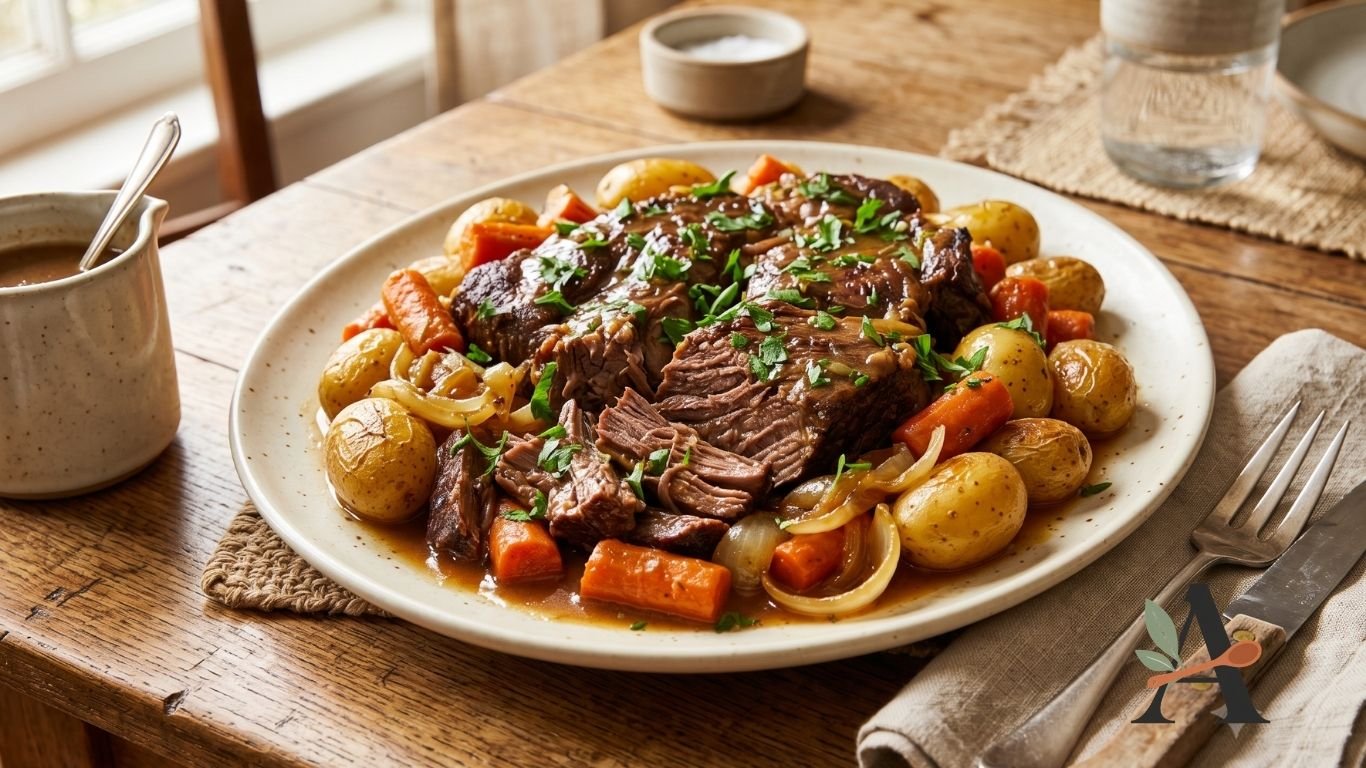
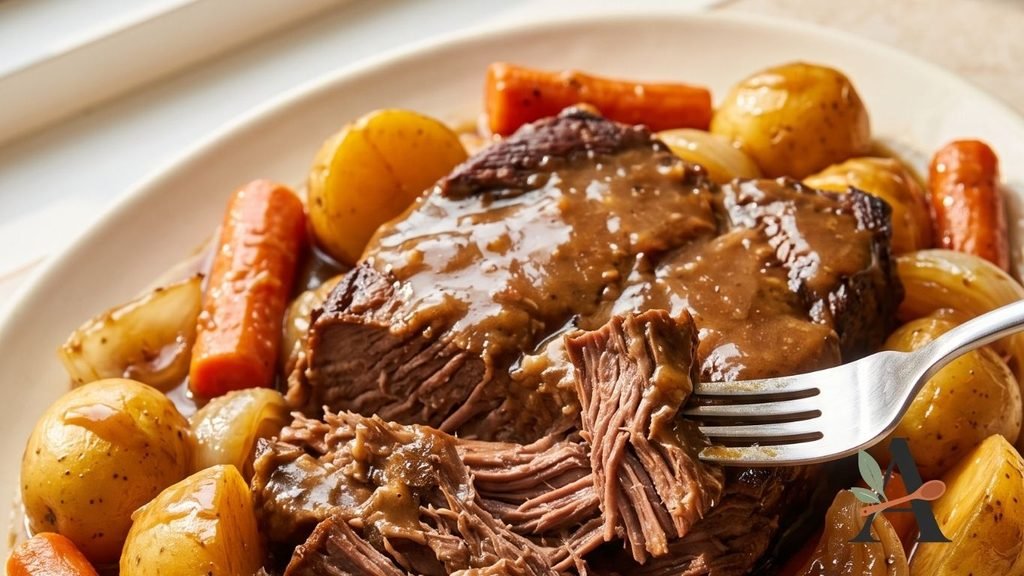
This slow cooker pot roast combines fork-tender beef with creamy potatoes, sweet carrots and rich homemade gravy. The chuck roast cooks gently for several hours, allowing its connective tissue to soften and create the succulent texture expected from a comforting Sunday dinner.
Searing the beef before slow cooking develops a deep brown crust and adds valuable flavour to the cooking liquid. The slow cooker handles the remaining work, making this an excellent recipe for busy days, cold evenings and relaxed family gatherings.
The vegetables cook beneath the beef, absorbing its savoury juices while helping to lift the roast above the base of the slow cooker. Once everything is tender, the cooking liquid is transformed into a smooth gravy.
Why You’ll Love This Pot Roast
- Fork-tender, pull-apart beef.
- Potatoes, carrots and gravy in one meal.
- Requires limited active preparation.
- Uses an affordable and flavourful cut of beef.
- Suitable for Sunday dinner.
- Ideal for autumn and winter.
- Produces satisfying leftovers.
- Can be prepared ahead.
- The cooking liquid becomes homemade gravy.
- Easy to serve with bread or green vegetables.
Ingredients You’ll Need
For the Pot Roast
- 1 boneless beef chuck roast, approximately 3½–4 pounds.
- 2 teaspoons kosher salt.
- 1 teaspoon ground black pepper.
- 1 teaspoon garlic powder.
- 2 tablespoons olive oil.
- 1 large yellow onion, cut into thick wedges.
- 4 garlic cloves, finely minced.
- 1½ pounds baby Yukon Gold potatoes.
- 5 large carrots, cut into 2-inch pieces.
- 2 cups low-sodium beef broth.
- 2 tablespoons Worcestershire sauce.
- 2 tablespoons tomato paste.
- 1 teaspoon dried thyme.
- 1 teaspoon dried rosemary.
- 2 bay leaves.
For the Gravy
- 2 tablespoons cornstarch.
- 2 tablespoons cold water.
- Salt and black pepper, as needed.
- Chopped fresh parsley, for garnish.
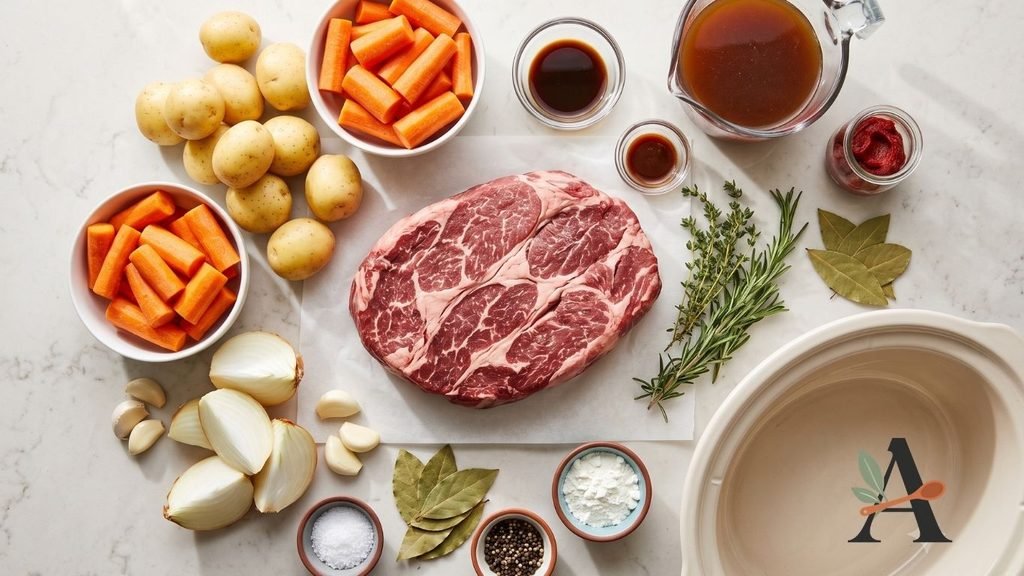
Ingredient Notes
Chuck roast: Chuck contains marbling and connective tissue that become tender during long, slow cooking. Leaner roasting cuts can remain dry or firm.
Potatoes: Baby Yukon Gold potatoes hold their shape and develop a creamy centre. Halve unusually large potatoes so they cook evenly.
Carrots: Cut the carrots into thick pieces. Thin slices may become overly soft before the beef is tender.
Onion: Thick wedges add flavour to the broth and are less likely to disappear during the long cooking time.
Beef broth: Low-sodium broth allows better control over the final seasoning.
Worcestershire sauce: Adds savoury depth and balances the richness of the beef.
Tomato paste: Provides colour, umami and body without making the gravy taste strongly of tomato.
Herbs: Thyme and rosemary complement the beef. Bay leaves add subtle depth to the cooking liquid.
Cornstarch: A cornstarch slurry thickens the cooking liquid into a glossy gravy without requiring a flour-based roux.
What Is the Best Cut of Beef for Pot Roast?
Boneless chuck roast is the best choice for this slow cooker recipe.
Chuck comes from the shoulder area and contains enough fat and connective tissue to remain juicy during prolonged cooking. As the roast cooks, collagen gradually softens and gives the meat its characteristic pull-apart texture.
Other possible cuts include:
- Chuck shoulder roast.
- Blade roast.
- Seven-bone roast.
- Brisket.
- Bottom round roast.
Brisket and round roast have different fat levels and grain structures, so their final texture and cooking time may differ.
Avoid very lean cuts intended for quick cooking. They can become dry before they reach a tender, shreddable texture.
Should You Sear Pot Roast First?
Searing is not essential for food safety, but it significantly improves flavour and appearance.
Browning the surface creates caramelised flavours that transfer to the cooking liquid. Deglazing the skillet ensures those browned pieces become part of the gravy.
For the best crust, pat the meat thoroughly dry and allow the oil to become hot before adding the roast.
How to Make Slow Cooker Pot Roast
Step 1: Prepare the Beef
Remove the chuck roast from its packaging and pat every surface dry with paper towels.
Season it evenly with kosher salt, black pepper and garlic powder.
Press the seasoning gently onto the surface.
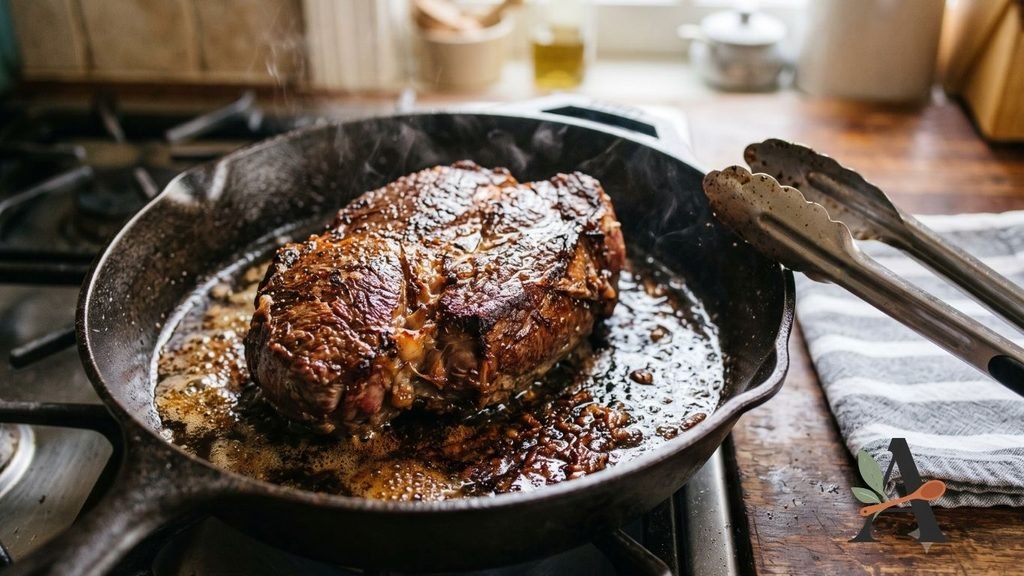
Step 2: Sear the Roast
Heat the olive oil in a large, heavy skillet over medium-high heat.
Once the oil is hot, add the seasoned chuck roast.
Sear it without moving for approximately 4–5 minutes, until the first side develops a deep brown crust.
Turn the roast and brown the opposite side for another 4–5 minutes. Briefly sear the edges where possible.
Transfer the browned roast to a clean plate.
Step 3: Prepare the Vegetables
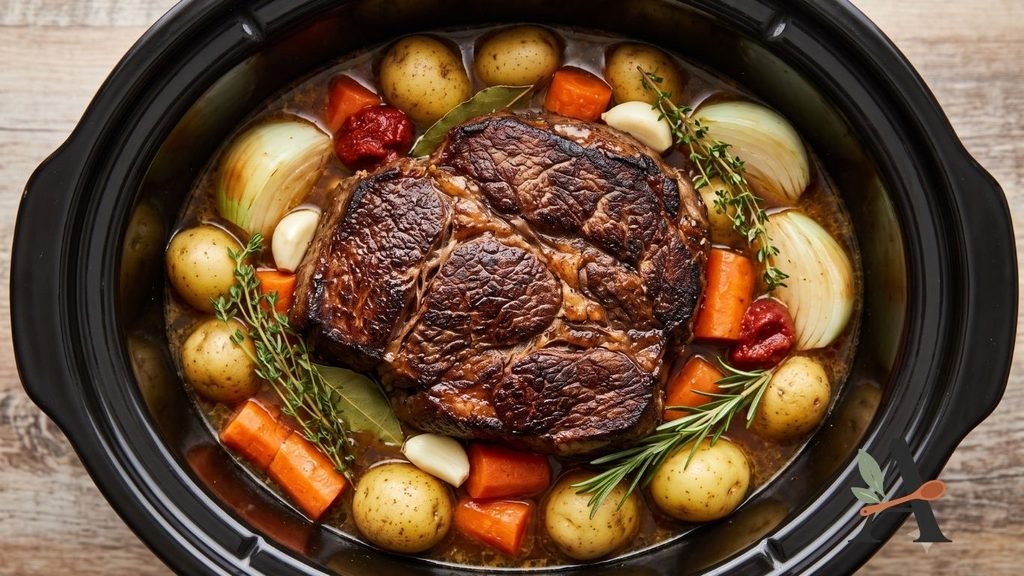
Place the onion wedges in the bottom of a 6-quart slow cooker.
Add the baby potatoes and thick carrot pieces.
Arrange the vegetables in an even layer so they cook consistently.
Place the seared chuck roast over the vegetables.
Step 4: Prepare the Cooking Liquid
Reduce the skillet heat to medium.
Add the minced garlic and tomato paste to the same skillet.
Cook for approximately 30–60 seconds, stirring continuously, until the tomato paste darkens slightly and the garlic becomes fragrant.
Pour a small amount of the beef broth into the skillet.
Use a wooden spoon to scrape the browned pieces from the bottom.
Pour the mixture over the roast and vegetables.
Add the remaining beef broth, Worcestershire sauce, dried thyme, dried rosemary and bay leaves.
Step 5: Cook the Pot Roast
Cover the slow cooker securely.
Cook on low for approximately 8–9 hours.
Alternatively, cook on high for approximately 5–6 hours. The low setting generally creates a more tender and evenly cooked roast.
Avoid opening the slow cooker unnecessarily because this releases heat and extends the cooking time.
Step 6: Check for Tenderness
Insert a fork into the thickest part of the roast.
The beef is ready when the fork enters easily and the meat separates without significant resistance.
If the roast is fully cooked but still firm, replace the lid and continue cooking for another 30–60 minutes.
Pot roast frequently becomes tough before it becomes tender. Additional cooking time allows the connective tissue to soften.
Step 7: Rest the Beef
Transfer the cooked roast to a large serving platter.
Remove the vegetables with a slotted spoon and arrange them around the beef.
Cover everything loosely with aluminium foil.
Allow the beef to rest for approximately 10–15 minutes.
Remove and discard the bay leaves.
Step 8: Prepare the Gravy
Skim excess fat from the surface of the cooking liquid.
Pour approximately 2 cups of the liquid into a small saucepan.
Bring it to a gentle simmer over medium heat.
In a separate bowl, whisk the cornstarch and cold water until completely smooth.
Slowly pour the slurry into the simmering liquid while whisking.
Cook for approximately 1–2 minutes, until the gravy thickens.
Taste and add salt or pepper only when necessary.
Step 9: Serve
Cut the rested beef into large pieces or pull it apart with two forks.
Spoon some of the gravy over the meat and vegetables.
Garnish with chopped fresh parsley and serve the remaining gravy separately.
Tips for Tender Pot Roast
Choose a Well-Marbled Chuck Roast
Visible marbling melts during cooking and contributes to a moist, tender texture.
Pat the Beef Dry
Moisture prevents the surface from browning properly. Dry beef forms a better crust in the skillet.
Sear Every Side
Browning the broad sides and edges develops more flavour for the roast and gravy.
Cut the Vegetables Thickly
Large pieces withstand the long cooking time better than thin slices.
Place Vegetables Underneath
Dense vegetables cook more efficiently when they are close to the hot bottom and sides of the slow cooker.
Cook on Low When Possible
Slow, gentle heat gives the collagen enough time to soften without drying the meat.
Do Not Open the Lid Frequently
Each time the lid is opened, heat escapes and the cooking time increases.
Cook Until Fork-Tender
Do not rely exclusively on the clock. The roast is ready when it separates easily.
Why Is My Pot Roast Tough?
A tough pot roast usually needs additional cooking time.
Chuck roast contains connective tissue that takes several hours to break down. The meat can reach a safe internal temperature before it becomes tender.
Replace the lid and continue cooking in 30–60-minute intervals.
Other possible causes include:
- Using a lean cut of beef.
- Cooking at an excessively high temperature.
- Not using enough cooking liquid.
- Removing the roast before the connective tissue softened.
- Using a roast that was still partially frozen.
- Cutting the meat immediately without resting it.
Why Is My Pot Roast Dry?
Dry pot roast can result from:
- Using a cut with insufficient marbling.
- Cooking a small roast for the full time intended for a larger one.
- Continuing to cook substantially after the meat became tender.
- Keeping the finished roast warm for too long.
- Storing the meat without any gravy or cooking liquid.
Keep leftovers with enough gravy to protect the meat during refrigeration and reheating.
How Much Liquid Should You Add?
The roast does not need to be completely submerged.
Two cups of broth are generally sufficient for a 3½–4-pound roast in a 6-quart slow cooker. The meat, onions and vegetables release additional liquid as they cook.
Adding too much broth can dilute the beef flavour and produce a thin gravy.
Can You Cook Pot Roast on High?
Yes, but low heat generally produces the best texture.
Cook the roast on high for approximately 5–6 hours, checking for tenderness towards the end.
The exact time depends on:
- The weight and thickness of the roast.
- The slow cooker model.
- The starting temperature of the ingredients.
- How frequently the lid is opened.
What to Serve With Pot Roast
The recipe already includes potatoes and carrots, but additional side dishes can complete the meal.
Serve pot roast with:
- Creamy mashed potatoes.
- Homemade dinner rolls.
- Easy roasted green beans.
- Garlic parmesan Brussels sprouts.
- Honey-glazed carrots.
- Creamy baked mac and cheese.
- Steamed broccoli.
- Buttered peas.
- A crisp green salad.
- Roasted asparagus.
Easy Pot Roast Variations
Pot Roast Without Potatoes
Omit the baby potatoes and serve the beef with mashed potatoes, rice or buttered noodles.
Red Wine Pot Roast
Replace ½ cup of the beef broth with dry red wine.
Add the wine to the skillet after browning the tomato paste. Simmer briefly while scraping up the browned pieces.
Mushroom Pot Roast
Add 8 ounces of halved cremini mushrooms during the final 2–3 hours.
Adding them later helps the mushrooms retain more texture.
Onion Gravy Pot Roast
Add a second sliced onion.
After cooking, blend some of the softened onion into the gravy before adding the cornstarch slurry.
Garlic Herb Pot Roast
Increase the garlic to six cloves and add several fresh thyme and rosemary sprigs.
Remove the woody stems before serving.
Spicy Pot Roast
Add ¼–½ teaspoon crushed red pepper flakes to the cooking liquid.
Pot Roast With Celery
Add three celery stalks cut into large pieces. Celery contributes extra savoury flavour to the broth.
Can You Prepare Pot Roast Ahead?
Yes.
Cut the carrots and onions up to one day ahead. Refrigerate them in airtight containers.
Measure the seasonings and combine the Worcestershire sauce, tomato paste and herbs separately.
For the deepest flavour, season and sear the beef immediately before assembling the slow cooker.
The complete pot roast can also be cooked one day ahead. Refrigerating the cooking liquid makes the fat solidify on the surface, where it can be removed easily before reheating.
How to Store Leftovers
Allow the beef and vegetables to cool promptly.
Transfer them to an airtight container with enough gravy to keep the meat moist.
Refrigerate within two hours and use within 3–4 days.
Store additional gravy in a separate covered container.
How to Reheat Pot Roast
In the Oven
Place the beef, vegetables and gravy in a covered oven-safe dish.
Reheat at 325°F until thoroughly hot.
Add a small amount of beef broth if the gravy has become too thick.
On the Stovetop
Place the meat and gravy in a covered saucepan or deep skillet.
Warm over low heat, turning the pieces occasionally.
In the Microwave
Place an individual serving in a microwave-safe container.
Cover loosely and heat in short intervals, stirring the gravy between each interval.
Avoid overheating because it can dry the beef.
Can You Freeze Pot Roast?
Yes.
Cool the beef completely and place it in a freezer-safe container with some gravy.
Freeze for up to three months for the best quality.
Potatoes can become slightly grainy after freezing, so freeze the beef separately when possible.
Thaw the frozen roast overnight in the refrigerator before reheating gently.
Frequently Asked Questions
Does the pot roast need to be covered with liquid?
No. The roast should sit partially above the cooking liquid. The meat and vegetables release additional juices during cooking.
Can I put a frozen roast in the slow cooker?
No. Thaw the roast completely in the refrigerator before slow cooking. A frozen roast may remain at an unsafe temperature for too long.
Should the vegetables go under or over the roast?
Place the vegetables underneath the beef. Dense vegetables benefit from direct contact with the hotter bottom and sides of the slow cooker.
Can I add the potatoes later?
Yes. If you prefer firmer potatoes, add them approximately halfway through the cooking time. Opening the lid will release heat, so work quickly.
How do I know when the roast is ready?
The meat should separate easily when pulled with a fork. If it still feels firm or rubbery, continue cooking.
Can I skip searing the beef?
Yes, but searing adds deeper flavour and creates a more attractive colour.
Why is my gravy too thin?
The cooking liquid needs to simmer after adding the cornstarch slurry. Add a little more slurry if necessary, but avoid adding dry cornstarch directly.
Why is my gravy lumpy?
Cornstarch must be mixed with cold water before being added to the hot cooking liquid. Whisk continuously while pouring it into the saucepan.
How much pot roast should I prepare per person?
A 3½–4-pound boneless chuck roast generally provides 6–8 servings, depending on appetites and the number of side dishes.
Can I leave the pot roast on warm?
Keep it on the warm setting only for a limited period and follow the slow cooker manufacturer’s safety instructions. Extended warming may dry the meat and soften the vegetables excessively.
Slow Cooker Pot Roast Recipe Card
Preparation time: 25 minutes
Cooking time: 8–9 hours
Resting time: 15 minutes
Total time: Approximately 9 hours 40 minutes
Servings: 6–8
Course: Dinner
Cuisine: American
Method: Slow cooking
Ingredients
- 1 boneless beef chuck roast, approximately 3½–4 pounds.
- 2 teaspoons kosher salt.
- 1 teaspoon black pepper.
- 1 teaspoon garlic powder.
- 2 tablespoons olive oil.
- 1 large yellow onion, cut into wedges.
- 4 garlic cloves, minced.
- 1½ pounds baby Yukon Gold potatoes.
- 5 large carrots, cut into 2-inch pieces.
- 2 cups low-sodium beef broth.
- 2 tablespoons Worcestershire sauce.
- 2 tablespoons tomato paste.
- 1 teaspoon dried thyme.
- 1 teaspoon dried rosemary.
- 2 bay leaves.
- 2 tablespoons cornstarch.
- 2 tablespoons cold water.
- Chopped fresh parsley.
Instructions
- Pat the chuck roast completely dry.
- Season every side with salt, pepper and garlic powder.
- Heat the olive oil in a large skillet.
- Sear the roast for 4–5 minutes per broad side.
- Brown the edges briefly and transfer the roast to a plate.
- Place the onion, potatoes and carrots in a 6-quart slow cooker.
- Set the seared roast over the vegetables.
- Add the garlic and tomato paste to the skillet.
- Cook for 30–60 seconds.
- Add a small amount of broth and scrape up the browned pieces.
- Pour the skillet mixture over the roast.
- Add the remaining broth, Worcestershire sauce, thyme, rosemary and bay leaves.
- Cover and cook on low for 8–9 hours.
- Check that the beef separates easily with a fork.
- Transfer the roast and vegetables to a serving platter.
- Rest the beef for 10–15 minutes.
- Discard the bay leaves.
- Pour 2 cups of cooking liquid into a saucepan.
- Bring the liquid to a gentle simmer.
- Combine the cornstarch and cold water.
- Whisk the slurry into the cooking liquid.
- Simmer for 1–2 minutes, until thickened.
- Serve the beef and vegetables with gravy.
- Garnish with chopped parsley.
Recipe Notes
- Use well-marbled chuck roast.
- Pat the beef dry before searing.
- Cut the vegetables into large pieces.
- Cook on low for the most tender texture.
- Continue cooking if the beef remains tough.
- Do not place frozen beef in the slow cooker.
- Test the complete recipe before confirming the exact cooking time and yield.