
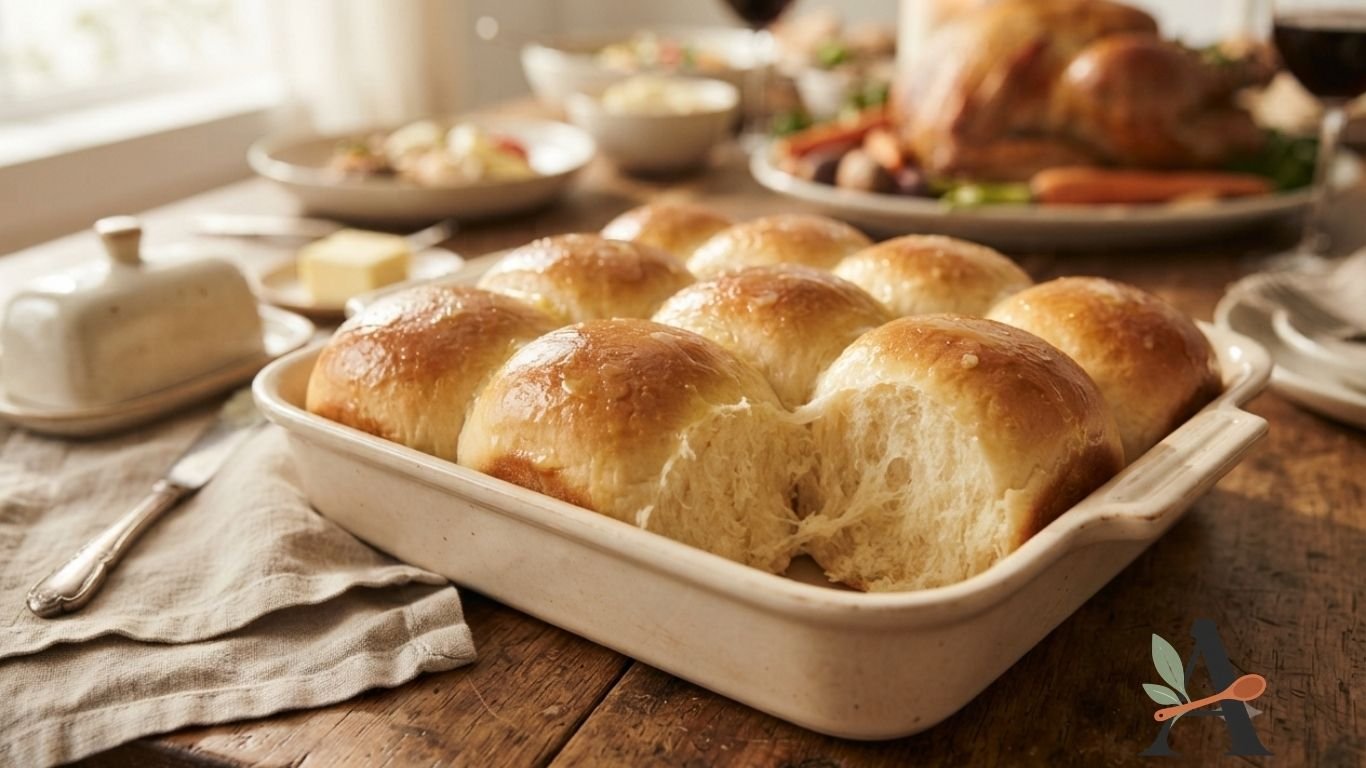
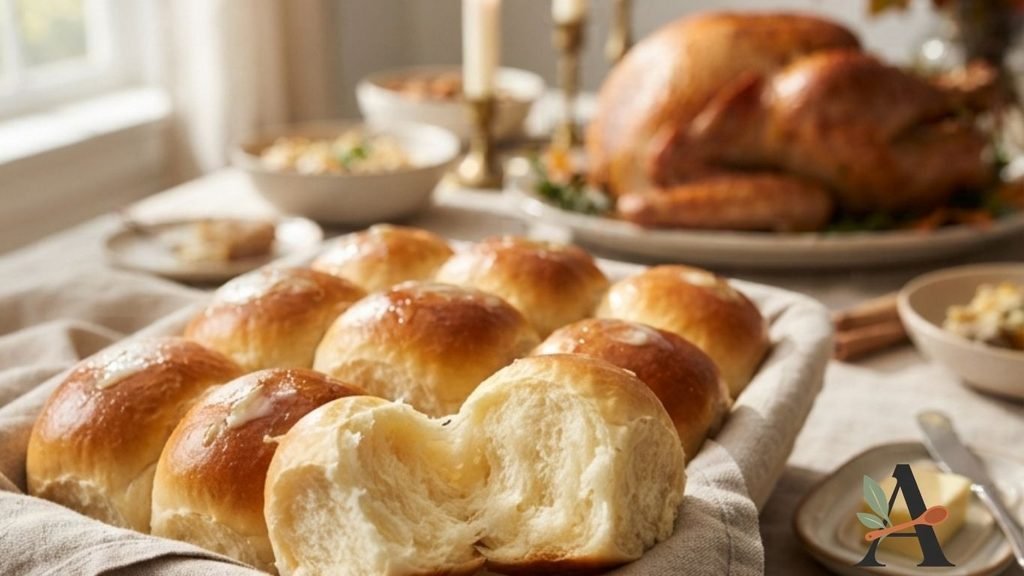
These homemade dinner rolls are soft, fluffy and finished with melted butter. Their lightly sweet, tender crumb makes them suitable for everyday family meals as well as Thanksgiving and Christmas dinners.
The dough uses simple baking ingredients and can be kneaded by hand or with a stand mixer. Two rising periods create the light texture, while brushing the warm rolls with butter gives them a soft, glossy top.
Serve them with soup, beef stew, roast turkey or your favourite holiday side dishes.
Why You’ll Love These Dinner Rolls
- Soft, light and fluffy.
- Finished with melted butter.
- Made with simple ingredients.
- Suitable for beginners working with yeast.
- Can be kneaded by hand or machine.
- Perfect for Thanksgiving and Christmas.
- Freezer-friendly.
- Useful for sandwiches and leftover turkey sliders.
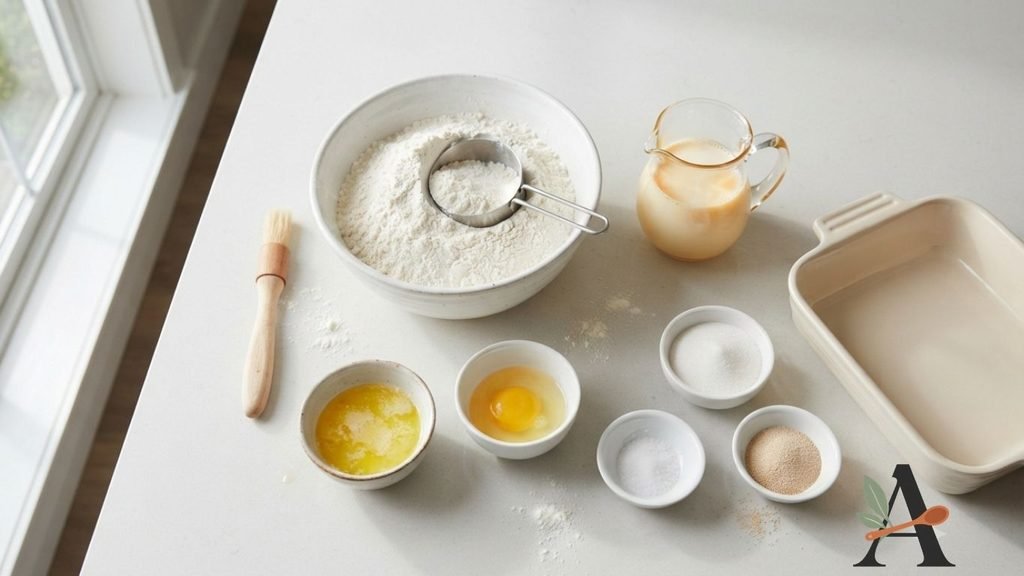
Ingredients You’ll Need
- ¾ cup whole milk.
- ¼ cup water.
- 2¼ teaspoons active dry yeast, one standard packet.
- ¼ cup granulated sugar, divided.
- ¼ cup unsalted butter, melted and slightly cooled.
- 1 large egg, at room temperature.
- 1 teaspoon salt.
- 3¼–3½ cups all-purpose flour.
- 2 tablespoons melted butter, for brushing.
Ingredient Notes
Yeast: Active dry yeast should be dissolved in warm liquid before mixing. Instant yeast may be mixed directly with the flour, although the method and rising speed can differ.
Milk: Whole milk creates a tender, rich crumb. Lower-fat milk can work but may produce a slightly less rich roll.
Butter: Melted butter adds flavor and softness. Allow it to cool slightly before combining it with the yeast mixture.
Egg: Adds structure, color and richness. A room-temperature egg incorporates more easily.
Flour: Begin with the lower quantity and add more only when necessary. Excess flour creates dense, dry rolls.
Sugar: Feeds the yeast and gives the rolls a gentle sweetness.
How to Make Homemade Dinner Rolls
Step 1: Warm the Milk and Water
Combine the milk and water in a small saucepan or microwave-safe jug.
Warm the mixture to approximately 105–110°F.
It should feel warm but not hot. Excessive heat can damage the yeast.
Step 2: Activate the Yeast
Pour the warm milk mixture into a large mixing bowl.
Add the yeast and one tablespoon of the measured sugar.
Stir gently and let it rest for approximately 5–10 minutes.
The surface should become creamy or foamy. If nothing happens, the yeast may be inactive or the liquid temperature may have been unsuitable.
Step 3: Add the Wet Ingredients
Add the remaining sugar, melted butter, egg and salt.
Whisk until evenly combined.
Ensure the butter is not hot before adding it.
Step 4: Form the Dough
Add three cups of flour and mix with a wooden spoon or the dough hook attachment of a stand mixer.
Continue adding the remaining flour gradually until a soft dough forms.
The dough should feel slightly tacky but should not remain wet enough to coat your hands heavily.
Step 5: Knead the Dough
Stand Mixer Method
Knead with the dough hook on low-to-medium speed for approximately 6–8 minutes.
Hand-Kneading Method
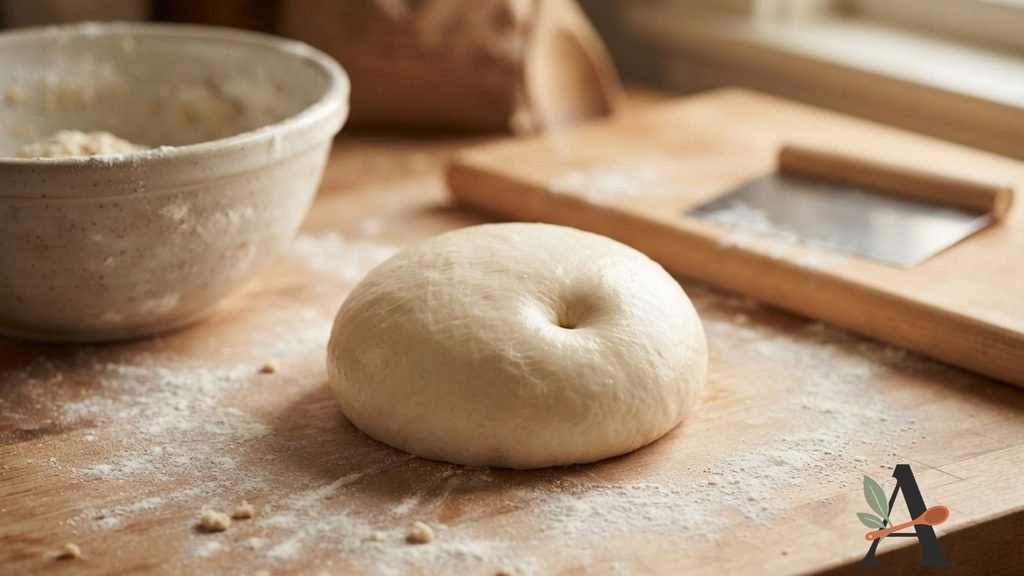
Transfer the dough to a lightly floured surface and knead for approximately 8–10 minutes.
The finished dough should look smooth and elastic. When gently pressed, it should spring back slowly.
Step 6: Let the Dough Rise
Lightly grease a large bowl.
Place the dough inside and turn it once so the surface receives a light coating of oil.
Cover the bowl with plastic wrap or a clean kitchen towel.
Leave it in a warm, draft-free place for approximately 60–90 minutes, or until doubled in size.
Rising time depends on room temperature and yeast activity.
Step 7: Shape the Rolls
Gently press the air out of the risen dough.
Divide it into 12 equal pieces. For evenly sized rolls, weigh the complete dough and divide that weight by 12.
Shape each piece into a smooth ball by pulling the edges towards the bottom and rolling it gently against the work surface.
Step 8: Complete the Second Rise
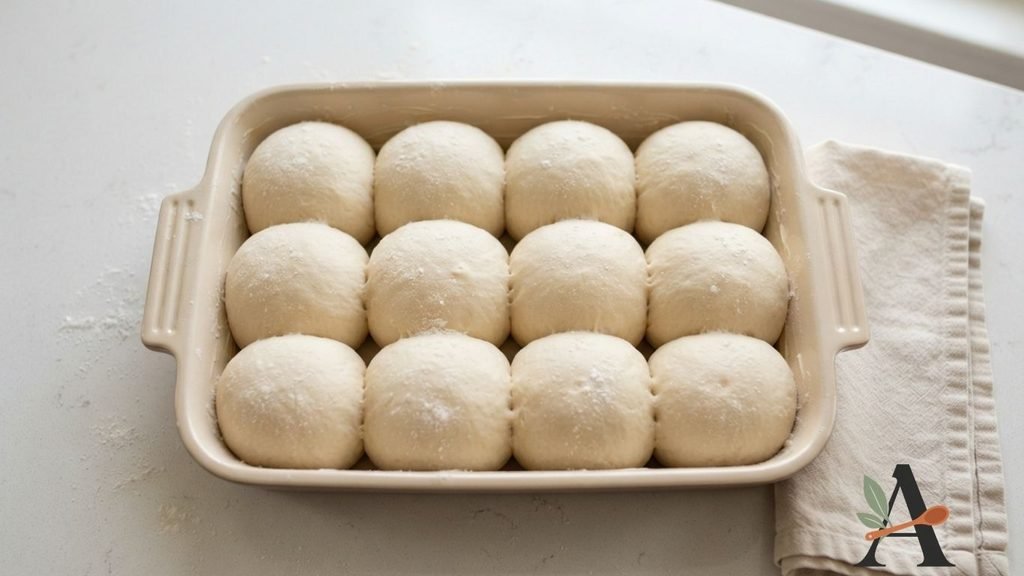
Grease a 9 × 13-inch baking dish.
Arrange the shaped rolls evenly inside, leaving a little space between them.
Cover and let them rise for approximately 45–60 minutes, until puffy and nearly touching.
Step 9: Bake the Dinner Rolls
Preheat the oven to 375°F during the final part of the second rise.
Bake for approximately 18–22 minutes, or until the tops are golden brown.
Fully baked enriched bread generally reaches an internal temperature of approximately 190°F in the centre.
If the tops brown too quickly, cover them loosely with aluminium foil.
Step 10: Brush With Butter
Remove the rolls from the oven.
Immediately brush their tops with two tablespoons of melted butter.
Let them cool in the dish for approximately 10 minutes before serving.
Tips for Soft and Fluffy Rolls
Check the Liquid Temperature
Liquid that is too hot can kill the yeast. Liquid that is too cool can slow activation.
Avoid Adding Too Much Flour
The dough should remain soft and slightly tacky. Add flour one tablespoon at a time only when necessary.
Knead Until Smooth
Proper kneading develops gluten, which traps gas from the yeast and creates a lighter roll.
Let the Dough Double
Watch the dough rather than relying only on the clock. A cool kitchen can significantly increase the rising time.
Shape the Rolls Tightly
A smooth, taut surface helps the rolls rise upwards and creates an attractive shape.
Do Not Overbake
Remove the rolls when golden and fully baked. Excess baking time makes them dry.
Brush While Warm
Melted butter softens the crust and adds shine and flavor.
How to Create a Warm Place for Dough
If your kitchen is cold, use one of these methods:
- Place the covered bowl near, but not directly on, a warm oven.
- Turn the oven on briefly, switch it off and confirm it is only slightly warm before adding the dough.
- Place a mug of hot water beside the covered dough inside a switched-off microwave.
Do not place dough in an excessively hot space because the yeast may become damaged.
Easy Dinner Roll Variations
Garlic Butter Dinner Rolls
Mix minced garlic and chopped parsley into the butter brushed over the baked rolls.
Honey Butter Rolls
Combine melted butter with a small amount of honey and brush it over the warm rolls.
Herb Dinner Rolls
Add dried rosemary, thyme or Italian seasoning to the dough.
Parmesan Dinner Rolls
Sprinkle finely grated parmesan over the rolls shortly before baking.
Cheddar Dinner Rolls
Fold finely shredded cheddar into the dough. Test the quantity because cheese changes the dough’s moisture and structure.
Whole-Wheat Dinner Rolls
Replace a portion of the all-purpose flour with whole-wheat flour. The rolls may be denser and may require additional liquid.
What to Serve With Dinner Rolls
Serve them with:
- Slow Cooker Beef Stew.
- Slow Cooker Chicken and Dumplings.
- Creamy Chicken Noodle Soup.
- Roast turkey.
- Baked ham.
- Roast chicken.
- Creamy Mashed Potatoes.
- Honey Glazed Carrots.
- Garlic Parmesan Roasted Brussels Sprouts.
- Creamy Baked Mac and Cheese.
Can You Make Dinner Rolls Ahead?
Yes. Prepare and shape the rolls, then arrange them in the baking dish.
Cover tightly and refrigerate overnight before the second rise is complete.
The next day, remove the dish from the refrigerator and allow the rolls to become puffy at room temperature. This may take longer than a standard second rise.
Bake only when the dough has visibly expanded.
Test this method with your ingredients before publishing an exact make-ahead time.
How to Store Homemade Rolls
Allow the rolls to cool completely.
Store them in an airtight container at room temperature for up to three days.
Avoid refrigerating bread unless necessary because refrigeration can make it stale faster.
Can You Freeze Dinner Rolls?
Yes. Place completely cooled rolls in a freezer-safe bag or container.
Freeze for up to three months for best quality.
Thaw them at room temperature, then warm them briefly before serving.
You can also freeze individually shaped dough portions, but this requires testing to confirm rising and baking instructions.
How to Reheat Dinner Rolls
Wrap several rolls loosely in aluminium foil and warm them in a 300°F oven until heated through.
Individual rolls can be microwaved briefly under a slightly damp paper towel.
Avoid overheating because the bread can become firm.
Frequently Asked Questions
Why did my dinner rolls not rise?
The yeast may have been inactive, the liquid may have been too hot or the room may have been too cold. Confirm the yeast foams during activation.
Why are my rolls dense?
Common causes include excessive flour, insufficient kneading or not allowing the dough to rise fully.
Can I use instant yeast?
Yes, but instant yeast can be mixed directly into the dry ingredients and may work more quickly. Monitor the dough’s size instead of relying only on time.
Can I knead the dough by hand?
Yes. Knead on a lightly floured surface until the dough becomes smooth and elastic.
How do I make every roll the same size?
Weigh the full dough, divide its weight by 12 and weigh each piece before shaping.
Can I use bread flour?
Yes. Bread flour can produce a slightly chewier structure and may absorb more liquid.
How do I know the rolls are fully baked?
The tops should be golden, the rolls should sound lightly hollow when tapped and the centre should reach approximately 190°F.
Homemade Dinner Rolls Recipe Card
Preparation time: 25 minutes
First rise: 60–90 minutes
Second rise: 45–60 minutes
Cooking time: 18–22 minutes
Yield: 12 rolls
Course: Bread or Side Dish
Cuisine: American
Method: Baking
Ingredients
- ¾ cup whole milk.
- ¼ cup water.
- 2¼ teaspoons active dry yeast.
- ¼ cup granulated sugar, divided.
- ¼ cup melted unsalted butter.
- 1 large egg.
- 1 teaspoon salt.
- 3¼–3½ cups all-purpose flour.
- 2 tablespoons melted butter, for brushing.
Instructions
- Warm the milk and water to 105–110°F.
- Add the yeast and one tablespoon of sugar.
- Rest for 5–10 minutes until foamy.
- Mix in the remaining sugar, butter, egg and salt.
- Gradually add the flour until a soft dough forms.
- Knead until smooth and elastic.
- Place the dough in a greased bowl.
- Cover and let it rise until doubled, approximately 60–90 minutes.
- Divide into 12 equal pieces and shape into balls.
- Arrange in a greased 9 × 13-inch baking dish.
- Cover and rise for 45–60 minutes until puffy.
- Bake at 375°F for 18–22 minutes.
- Brush the warm rolls with melted butter.
- Cool for approximately 10 minutes before serving.
Recipe Notes
- Check the temperature of the milk mixture.
- Add flour gradually.
- Watch the dough’s size rather than only the clock.
- Bake until golden and approximately 190°F internally.
- Test the complete recipe before confirming exact timings.