

This Christmas breakfast casserole combines savoury sausage, fluffy eggs, melted cheddar and cubes of soft bread in one comforting dish. Red pepper and green onions add festive colour and fresh flavour.
Assemble the casserole on Christmas Eve and refrigerate it overnight. On Christmas morning, simply place it in the oven and bake until golden, puffed and completely set.
It is a practical choice for feeding a family or overnight guests because most of the preparation is completed in advance.
Why You’ll Love This Christmas Breakfast
- Prepared the night before.
- Easy to bake on Christmas morning.
- Feeds approximately eight people.
- Made in one casserole dish.
- Filled with sausage, eggs and cheese.
- Attractive red-and-green colours.
- Easy to customise.
- Suitable for holiday brunch.
- Uses straightforward ingredients.
- Delicious with sweet breakfast dishes.
Ingredients You’ll Need
- 1 pound breakfast sausage.
- 1 tablespoon unsalted butter or olive oil.
- 1 medium red bell pepper, diced.
- 3 green onions, thinly sliced.
- 8 cups day-old bread, cut into 1-inch cubes.
- 2 cups shredded sharp cheddar cheese, divided.
- 10 large eggs.
- 2½ cups whole milk.
- 1 teaspoon Dijon mustard.
- 1 teaspoon garlic powder.
- ½ teaspoon onion powder.
- ½ teaspoon salt.
- ¼ teaspoon ground black pepper.
- ¼ teaspoon smoked paprika, optional.
- 2 tablespoons chopped fresh parsley, for garnish.

Ingredient Notes
Breakfast sausage: Pork, turkey or chicken breakfast sausage can be used. Cook it completely and drain excess fat before assembling the casserole.
Bread: Slightly dry bread absorbs the egg mixture without disintegrating. French bread, sourdough, brioche or sturdy sandwich bread works well.
Eggs: Ten large eggs create a substantial custard that holds the casserole together.
Milk: Whole milk produces a creamy texture. Lower-fat milk works but creates a slightly lighter result.
Cheddar: Sharp cheddar provides a stronger flavour. Grating cheese from a block usually gives smoother melting.
Red pepper and green onions: These provide festive colour and a fresh savoury flavour.
Dijon mustard: Adds depth without making the casserole taste strongly of mustard.
What Type of Bread Should You Use?
Use sturdy bread that can absorb the egg mixture while maintaining some structure.
Good choices include:
- French bread.
- Italian bread.
- Sourdough.
- Brioche.
- Challah.
- Firm white sandwich bread.
Fresh, very soft bread can become mushy. Cut fresh bread into cubes and leave it uncovered for several hours, or dry it in a 300°F oven for approximately 10 minutes.
Avoid heavily seeded or strongly flavoured bread unless it complements the other ingredients.
How to Make Christmas Breakfast Casserole
Step 1: Prepare the Baking Dish
Grease a 9 × 13-inch baking dish with butter or non-stick cooking spray.
Ensure the corners and sides are coated.
Step 2: Cook the Sausage
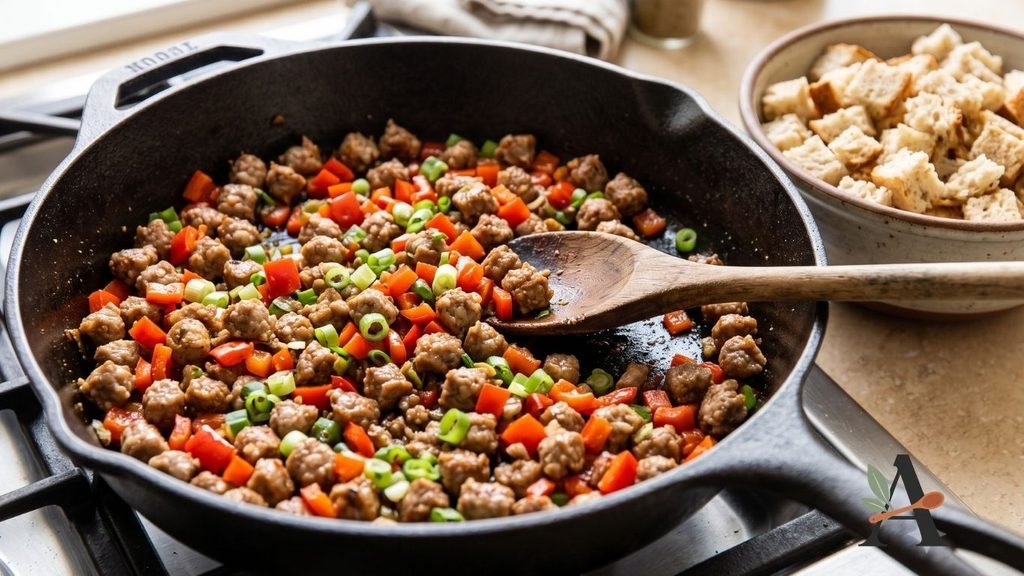
Place the breakfast sausage in a large skillet over medium heat.
Cook until browned and completely cooked, breaking it into small pieces with a wooden spoon.
Transfer the sausage to a paper-towel-lined plate and drain excess fat.
Step 3: Cook the Red Pepper
Leave approximately one teaspoon of fat in the skillet or add butter.
Cook the diced red pepper for 3–4 minutes, until slightly softened.
Add the white and pale-green parts of the green onions and cook for one additional minute.
Step 4: Add the Bread
Spread the bread cubes evenly across the prepared baking dish.
Use enough bread to fill the dish without packing it tightly.
Step 5: Add the Sausage and Vegetables
Scatter the cooked sausage, red pepper and green onions evenly over the bread.
Reserve some dark-green onion slices for garnishing.
Step 6: Add the Cheese
Sprinkle approximately 1½ cups of shredded cheddar over the casserole.
Reserve the remaining cheese for the top.
Step 7: Make the Egg Mixture
In a large bowl, whisk together:
- Eggs.
- Whole milk.
- Dijon mustard.
- Garlic powder.
- Onion powder.
- Salt.
- Black pepper.
- Optional smoked paprika.
Whisk until the yolks and whites are completely combined.
Step 8: Assemble the Casserole
Pour the egg mixture slowly and evenly over the bread.
Press the bread down gently with a spatula so the upper pieces absorb some custard.
Sprinkle the remaining cheddar over the surface.

Step 9: Refrigerate Overnight
Cover the dish securely with foil or reusable food wrap.
Refrigerate for at least eight hours or overnight.
This resting period allows the bread to absorb the seasoned egg mixture.
Step 10: Bring the Dish Towards Room Temperature
Remove the casserole from the refrigerator approximately 30 minutes before baking.
Do not place an extremely cold glass or ceramic dish directly into a hot oven because sudden temperature changes may damage it.
Step 11: Bake the Casserole
Preheat the oven to 350°F.
Keep the casserole covered and bake for 30 minutes.
Remove the foil and continue baking for another 15–25 minutes, until the centre is set and the top is golden.
Step 12: Check for Doneness
Insert a thin knife into the centre. It should emerge without liquid egg.
For food safety, the centre of an egg casserole should reach at least 160°F.
Step 13: Rest and Serve
Allow the casserole to rest for approximately 10 minutes.
Garnish it with fresh parsley and the reserved green onion slices before cutting.
Can You Bake It Immediately?
Yes, but allowing the assembled casserole to rest improves its texture.
If baking it on the same day, refrigerate it for at least 30–60 minutes so the bread can absorb the egg mixture.
A casserole baked immediately may contain drier bread pieces and extra liquid around the bottom.
Tips for the Best Breakfast Casserole
Use Day-Old Bread
Slightly dry bread absorbs the custard more effectively and maintains its shape.
Drain the Sausage
Excess sausage fat can make the casserole greasy.
Cut the Ingredients Evenly
Small, evenly sized pieces distribute more consistently through every serving.
Pour the Custard Slowly
Pour over the complete surface rather than concentrating it in one area.
Press the Bread Gently
This helps the top layer absorb the egg mixture without compacting the casserole.
Cover During the First Part of Baking
Foil prevents the cheese and bread from browning before the centre is cooked.
Rest Before Cutting
The casserole becomes easier to slice after resting for approximately 10 minutes.
Common Problems and Solutions
Why Is My Breakfast Casserole Soggy?
Possible causes include:
- Using excessively soft fresh bread.
- Adding too much milk.
- Using watery vegetables.
- Failing to drain the sausage.
- Underbaking the centre.
- Cutting the casserole immediately after baking.
Continue cooking until the centre is completely set.
Why Is the Casserole Dry?
It may contain too much bread, insufficient egg mixture or may have baked for too long.
Measure the bread loosely rather than compressing it into the measuring cup.
Why Is the Centre Still Runny?
The dish may have been very cold when it entered the oven, or the casserole may be particularly thick.
Cover the top loosely and continue baking in five-minute intervals.
Why Did the Edges Burn?
The baking dish may be too dark, or the casserole may have been positioned too close to the heating element.
Easy Christmas Breakfast Variations
Bacon Breakfast Casserole
Replace the sausage with approximately one pound of cooked, crumbled bacon.
Ham and Cheese Casserole
Use diced cooked ham and Swiss or cheddar cheese.
Vegetarian Christmas Casserole
Omit the meat and add cooked mushrooms, spinach, peppers and onions.
Cook watery vegetables before adding them.
Spinach and Feta Breakfast Bake
Use cooked, thoroughly drained spinach with crumbled feta and mozzarella.
Hash Brown Christmas Casserole
Replace the bread with thawed frozen hash browns using a separately tested ratio.
Spicy Sausage Casserole
Use hot breakfast sausage and add chopped jalapeño peppers or red pepper flakes.
Croissant Breakfast Casserole
Replace the bread with torn day-old croissants for a richer result.
What to Serve With Christmas Breakfast Casserole
Serve it with:
- Overnight French Toast Casserole.
- Homemade Cinnamon Rolls.
- Cranberry Orange Bread.
- Gingerbread Loaf.
- Fresh fruit salad.
- Roasted breakfast potatoes.
- Blueberry muffins.
- Greek yoghurt parfaits.
- Coffee.
- Hot chocolate.
- Fresh orange juice.
The savoury casserole balances sweet Christmas dishes particularly well.
Make-Ahead Instructions
Assemble the complete casserole on Christmas Eve.
Cover it securely and refrigerate for up to 24 hours before baking.
Cook the sausage and vegetables up to two days ahead when required. Store them in separate airtight containers until assembly.
Do not pour warm sausage or vegetables over the eggs. Allow cooked components to cool before assembling the casserole.
How to Store Leftovers
Allow leftovers to cool slightly.
Transfer them to an airtight container or cover the baking dish securely.
Refrigerate within two hours and use within 3–4 days.
Individual portions make convenient breakfasts during the days following Christmas.
Can You Freeze Breakfast Casserole?
Yes. A baked breakfast casserole generally freezes more reliably than an uncooked one.
Allow it to cool completely and cut it into individual portions. Wrap each portion securely and place it in a freezer-safe container.
Freeze for up to two months for the best quality.
Thaw overnight in the refrigerator before reheating.
How to Reheat Christmas Breakfast Casserole
In the Oven
Cover the casserole with foil and warm it at 325°F until thoroughly heated.
In the Microwave
Place one portion on a microwave-safe plate.
Heat it in short intervals until hot throughout.
In the Air Fryer
Reheat a firm individual portion at a moderate temperature, monitoring it closely to prevent dry edges.
Reheated egg dishes should reach 165°F.
Frequently Asked Questions
Can I use fresh bread?
Yes, but dry the cubes briefly in the oven so they absorb the custard properly.
Can I make it without sausage?
Yes. Use cooked bacon, ham or prepared vegetables.
Can I use a different cheese?
Yes. Monterey Jack, Swiss, Gouda, mozzarella or pepper Jack can be used.
How long can it remain refrigerated before baking?
The assembled casserole can generally be refrigerated for up to 24 hours.
Can I halve the recipe?
Yes. Prepare it in a smaller baking dish and begin checking it earlier.
How do I know when the casserole is ready?
The centre should be set, a knife should emerge without liquid egg and the internal temperature should reach at least 160°F.
Can I bake it in a glass dish?
Yes. Allow a refrigerated glass dish to warm towards room temperature before placing it in the hot oven.
How many people does it serve?
The casserole provides approximately eight generous servings or 10 smaller portions.

Christmas Breakfast Casserole Recipe Card
Preparation time: 25 minutes
Cooking time: 45–55 minutes
Chilling time: At least 8 hours
Resting time: 10 minutes
Total time: Approximately 9 hours 30 minutes
Yield: 8–10 servings
Course: Breakfast or Brunch
Cuisine: American
Method: Baking
Ingredients
- 1 pound breakfast sausage.
- 1 tablespoon butter or olive oil.
- 1 red bell pepper, diced.
- 3 green onions, sliced.
- 8 cups day-old bread cubes.
- 2 cups shredded cheddar, divided.
- 10 large eggs.
- 2½ cups whole milk.
- 1 teaspoon Dijon mustard.
- 1 teaspoon garlic powder.
- ½ teaspoon onion powder.
- ½ teaspoon salt.
- ¼ teaspoon black pepper.
- ¼ teaspoon smoked paprika, optional.
- 2 tablespoons chopped parsley.
Instructions
- Grease a 9 × 13-inch baking dish.
- Brown the breakfast sausage in a large skillet.
- Drain the sausage thoroughly.
- Cook the diced red pepper for 3–4 minutes.
- Add the pale parts of the green onions and cook for one minute.
- Spread the bread cubes inside the baking dish.
- Add the sausage, pepper and onions.
- Sprinkle 1½ cups of cheddar over the ingredients.
- Whisk the eggs, milk, mustard and seasonings.
- Pour the egg mixture evenly over the bread.
- Press the bread gently into the custard.
- Add the remaining cheese.
- Cover and refrigerate overnight.
- Remove the casserole from the refrigerator 30 minutes before baking.
- Preheat the oven to 350°F.
- Bake covered for 30 minutes.
- Remove the foil and bake for another 15–25 minutes.
- Confirm that the centre is set and reaches at least 160°F.
- Rest for 10 minutes.
- Garnish with parsley and green onions before serving.
Recipe Notes
- Use slightly dry, day-old bread.
- Drain the cooked sausage.
- Cook watery vegetables before assembling the casserole.
- Refrigerate for at least eight hours when possible.
- Reheat leftovers to 165°F.
- Test the complete recipe before confirming the final cooking time and