
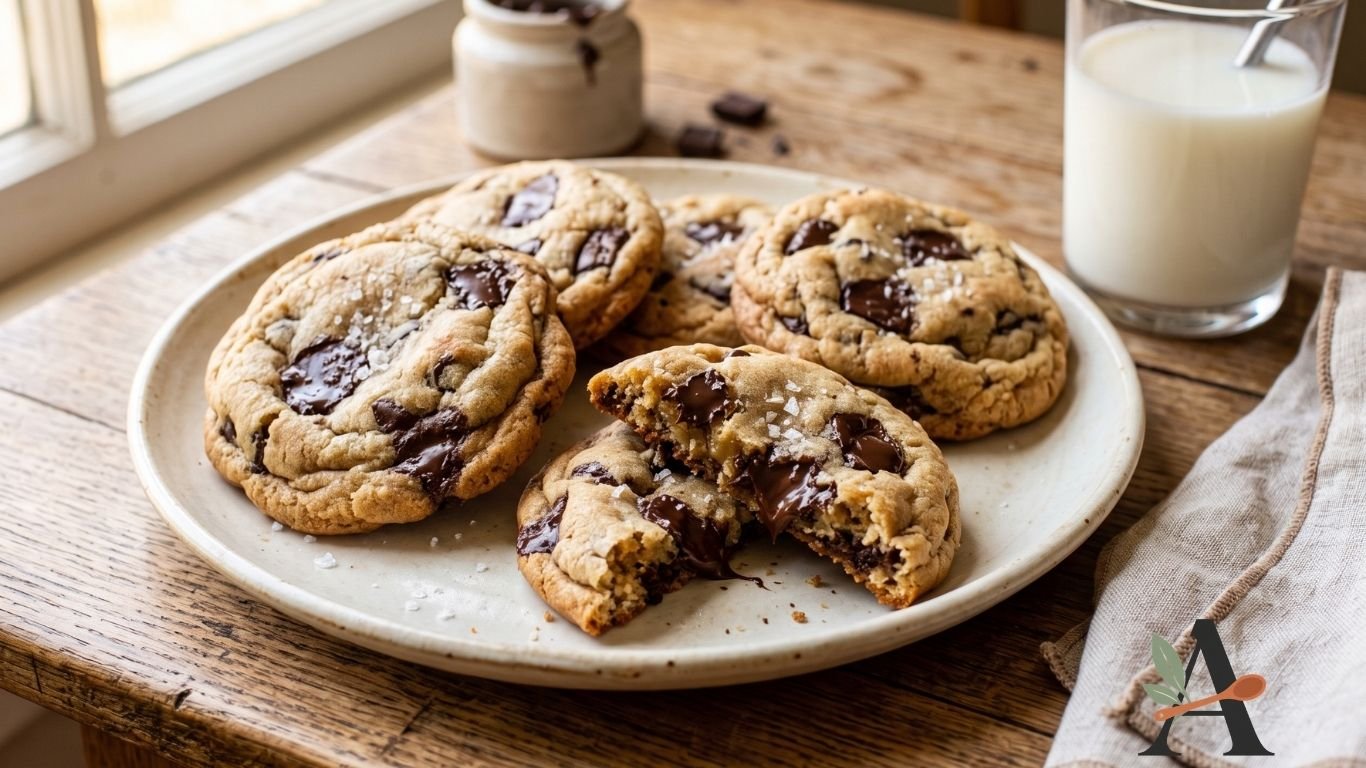
These soft chocolate chip cookies have thick, chewy centres, lightly golden edges and plenty of melted chocolate. Brown sugar, an additional egg yolk and a short chilling period help create their bakery-style texture.
The dough is prepared with melted butter, so an electric mixer is not required. It can also be made ahead, refrigerated or frozen in individual portions for convenient baking.
Serve the cookies slightly warm with milk, add them to dessert trays or package them for parties and homemade gifts.
Why You’ll Love These Chocolate Chip Cookies
- Soft and chewy centres.
- Lightly crisp, golden edges.
- Thick bakery-style appearance.
- Filled with melted chocolate.
- No electric mixer required.
- Easy to prepare ahead.
- Freezer-friendly dough.
- Simple everyday ingredients.
- Suitable for parties and gifts.
- Easy to customise.
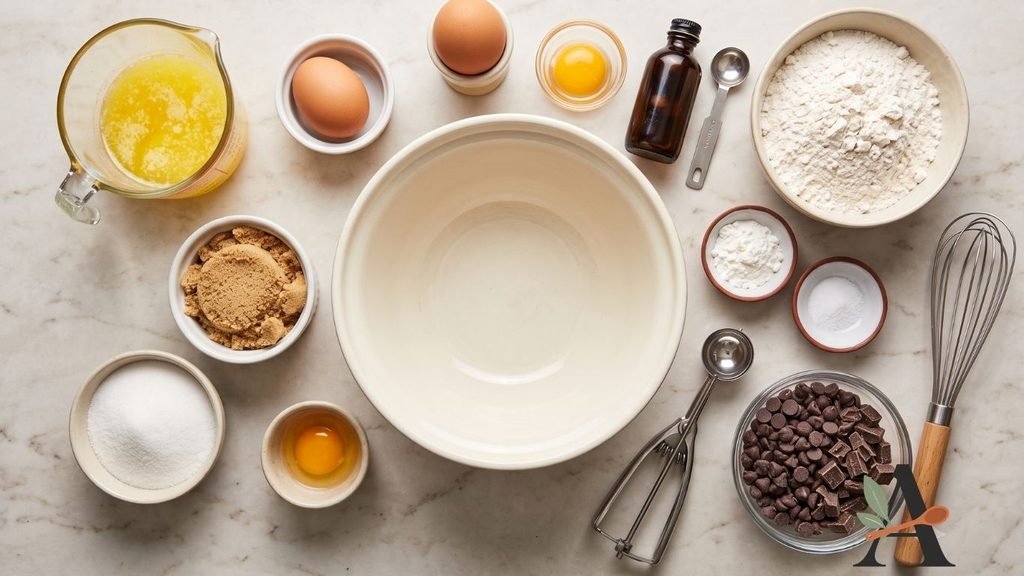
Ingredients You’ll Need
- ¾ cup unsalted butter, melted and slightly cooled.
- 1 cup packed light brown sugar.
- ½ cup granulated sugar.
- 1 large egg, at room temperature.
- 1 large egg yolk, at room temperature.
- 2 teaspoons pure vanilla extract.
- 2¼ cups all-purpose flour.
- 1 tablespoon cornstarch.
- 1 teaspoon baking soda.
- ½ teaspoon salt.
- 1½ cups semisweet chocolate chips or chunks.
- Flaky salt, optional.
Ingredient Notes
Melted butter: Creates a dense, chewy texture and makes the dough easy to mix by hand. Allow it to cool before adding the eggs.
Brown sugar: Adds moisture, caramel flavour and chewiness.
Granulated sugar: Helps the cookies spread and gives the edges a delicate crispness.
Egg and egg yolk: The whole egg provides structure, while the additional yolk adds richness and tenderness.
Vanilla: Complements the butter, brown sugar and chocolate.
Flour: Measure it accurately. Too much flour creates dry, cakey cookies.
Cornstarch: Helps produce soft centres and a tender texture.
Baking soda: Encourages spreading and browning.
Chocolate: Semisweet chocolate balances the sweet dough. Use chips, chunks or chopped chocolate.
Flaky salt: An optional finishing touch that contrasts with the sweet chocolate.
Chocolate Chips, Chunks or Chopped Chocolate?
Chocolate chips retain their shape relatively well and provide an even distribution of chocolate.
Chocolate chunks create larger melted pockets and a more rustic appearance.
A chopped chocolate bar creates irregular pieces and thin flakes that melt throughout the dough.
For varied texture, use a combination of chips and chopped chocolate. Reserve several pieces for pressing into the tops before baking.
How to Make Soft Chocolate Chip Cookies
Step 1: Melt and Cool the Butter
Melt the butter gently in a saucepan or microwave-safe bowl.
Set it aside for approximately 10–15 minutes, until it is no longer hot.
The butter may remain liquid, but excessive heat can affect the egg and make the dough greasy.
Step 2: Combine the Dry Ingredients
Place the flour, cornstarch, baking soda and salt in a medium bowl.
Whisk thoroughly to distribute the ingredients and remove any lumps.
Set the bowl aside.
Step 3: Whisk the Butter and Sugars
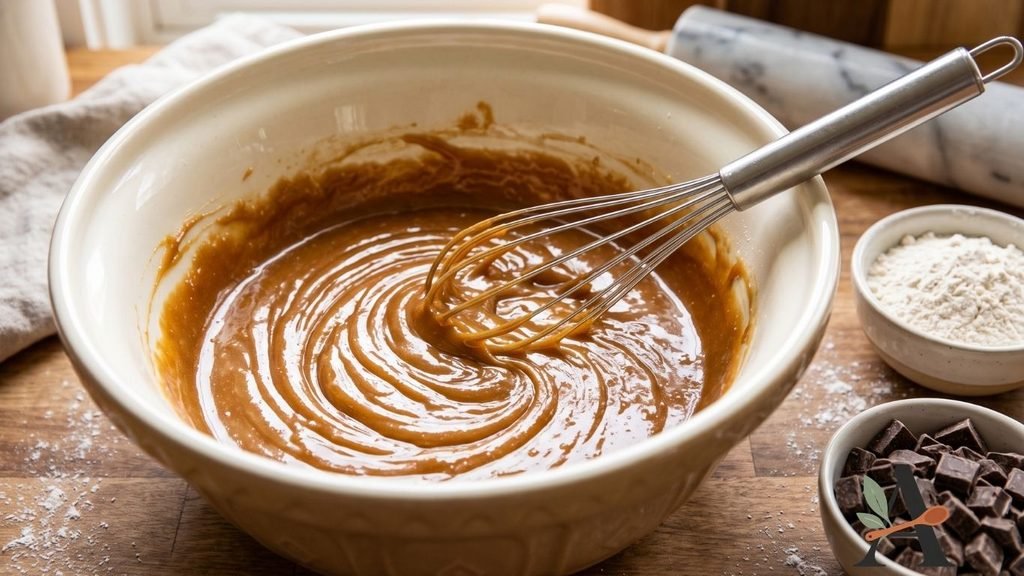
Pour the slightly cooled melted butter into a large mixing bowl.
Add the brown sugar and granulated sugar.
Whisk until smooth and glossy, breaking up any lumps of brown sugar.
Step 4: Add the Egg and Egg Yolk
Add the whole egg and whisk until combined.
Add the egg yolk and continue whisking until the mixture appears smooth and slightly thickened.
Step 5: Add the Vanilla
Pour in the vanilla extract.
Whisk until evenly incorporated.
Step 6: Add the Dry Ingredients
Add the dry mixture to the wet ingredients.
Fold gently with a sturdy spatula until only a few streaks of flour remain.
Avoid overmixing.
Step 7: Add the Chocolate
Reserve approximately ¼ cup of chocolate for decorating.
Fold the remaining chocolate into the dough until evenly distributed.
The dough will be soft and may appear slightly glossy.
Step 8: Chill the Dough
Cover the bowl and refrigerate the dough for at least 1 hour.
Chilling allows the flour to absorb moisture and firms the butter, helping to prevent excessive spreading.
For a deeper flavour, refrigerate the dough overnight.
Step 9: Prepare the Oven and Baking Sheets
Preheat the oven to 350°F.
Line light-coloured baking sheets with parchment paper or silicone baking mats.
Do not grease the pans.
Step 10: Portion the Dough
Scoop portions containing approximately three tablespoons of dough for large bakery-style cookies.
Roll them gently into tall balls rather than flattening them.
Arrange the portions several inches apart on the baking sheets.
Press the reserved chocolate pieces into the tops.

Step 11: Bake the Cookies
Bake one sheet at a time for approximately 10–13 minutes.
The cookies are ready when:
- The edges are lightly golden.
- The surfaces appear mostly set.
- The centres still look soft.
- The cookies have spread but remain thick.
Avoid waiting for the centres to become firm.
Step 12: Shape the Cookies
For rounder cookies, place a large circular cutter around each warm cookie.
Move it gently in a circular motion to smooth the edges.
Complete this step immediately after removing the tray from the oven.
Step 13: Add Flaky Salt
Sprinkle the warm cookies lightly with flaky salt, if desired.
Press additional chocolate pieces into the tops for a bakery-style appearance.
Step 14: Cool the Cookies
Leave the cookies on the baking sheet for approximately 5–10 minutes.
Transfer them carefully to a wire rack.
The centres will continue setting as they cool.
Tips for Thick and Chewy Cookies
Cool the Melted Butter
Hot butter can make the dough greasy and may begin cooking the egg.
Use More Brown Sugar
Brown sugar retains moisture and produces a chewier centre.
Add an Extra Egg Yolk
The yolk provides richness without adding the additional liquid found in an egg white.
Measure the Flour Accurately
Use a kitchen scale when possible. Otherwise, spoon the flour into the measuring cup and level it.
Chill the Dough
Warm dough spreads rapidly. Chilling also improves the flavour and texture.
Make Tall Dough Portions
Taller portions spread more slowly and help create thick centres.
Use Cool Baking Sheets
Allow each pan to cool before adding another batch of dough.
Avoid Overbaking
The cookies should still look soft in the centre when they leave the oven.
How to Tell When Chocolate Chip Cookies Are Done
Look at the edges rather than the centre.
The edges should be lightly golden and stable, while the centre should appear pale, soft and slightly underdone.
The surface should no longer look completely wet.
Residual heat from the baking sheet finishes cooking the centres without drying them out.
Why Did My Cookies Spread Too Much?
Common causes include:
- Butter that was too hot.
- Dough that was insufficiently chilled.
- Too little flour.
- Warm baking sheets.
- An inaccurate oven temperature.
- Placing the dough on greased pans.
- Substituting margarine or spreadable butter.
Refrigerate the remaining dough until firm before baking another tray.
Why Did My Cookies Not Spread?
Cookies that remain in firm balls may result from:
- Too much flour.
- Dough that was chilled until extremely hard.
- An oven that is too hot.
- Portions packed too tightly.
- Using a different type of flour.
- Incorrect ingredient measurements.
Allow very firm dough portions to stand briefly at room temperature before baking.
Why Are My Cookies Cakey?
A cakey texture may be caused by:
- Too much flour.
- Too much egg white.
- Excessive mixing.
- Too much raising agent.
- Baking for too long.
- Substituting ingredients that alter the moisture balance.
Measure accurately and mix only until the flour disappears.
Easy Chocolate Chip Cookie Variations
Double-Chocolate Chip Cookies
Use a separately tested cocoa-based dough because cocoa powder changes the flour and moisture balance.
Milk Chocolate Cookies
Replace the semisweet chocolate with milk chocolate for a sweeter cookie.
Dark Chocolate Sea Salt Cookies
Use chopped dark chocolate and finish the warm cookies with flaky salt.
White Chocolate Cookies
Replace part or all of the semisweet chocolate with white chocolate chips.
Chocolate Chip Pecan Cookies
Fold toasted chopped pecans into the dough.
Walnut Chocolate Chip Cookies
Add chopped toasted walnuts for a classic variation.
Oatmeal Chocolate Chip Cookies
Use a separately tested oatmeal-cookie formula because oats change the texture and liquid absorption.
Christmas Chocolate Chip Cookies
Replace part of the chocolate with red and green candy-coated chocolates.
Caramel Chocolate Chip Cookies
Add soft caramel pieces and finish the cookies with flaky salt.
Can You Make Cookie Dough Ahead?
Yes.
Cover the dough tightly and refrigerate it for up to three days.
For convenient baking, portion the dough before refrigerating it.
Allow extremely firm portions to stand at room temperature briefly while the oven preheats.
How to Store Chocolate Chip Cookies
Allow the cookies to cool completely.
Store them in an airtight container at room temperature for up to five days.
Place parchment paper between layers.
A small piece of bread inside the container may help preserve softness, but do not allow it to touch the cookies directly.
Can You Freeze Chocolate Chip Cookies?
Yes.
Freeze the Cookie Dough
Portion the dough and arrange it on a lined baking sheet.
Freeze until firm, then transfer the portions to a labelled freezer-safe container.
Freeze for up to three months.
Bake from frozen, allowing a little additional time, or thaw overnight in the refrigerator.
Freeze Baked Cookies
Place completely cooled cookies in a freezer-safe container with parchment between the layers.
Freeze for up to three months.
Thaw at room temperature or warm them briefly before serving.
How to Reheat Chocolate Chip Cookies
Place individual cookies in a microwave and heat them for a few seconds.
Alternatively, arrange several cookies on a baking sheet and warm them in a 300°F oven.
Heat only until the chocolate softens and the centres become warm.
Overheating can make the cookies dry or hard.
Frequently Asked Questions
Can I use salted butter?
Yes. Reduce or omit the added salt, depending on the butter’s salt content.
Do I have to chill the dough?
Chilling is strongly recommended because the recipe uses melted butter. It controls spreading and improves texture.
Can I use an electric mixer?
It is unnecessary, but you may use one on low speed. Avoid incorporating excessive air.
Why are my cookies greasy?
The butter may have been too hot, the dough may need more chilling or the flour may have been measured incorrectly.
Can I make smaller cookies?
Yes. Use smaller portions and reduce the baking time accordingly.
Can I make giant cookies?
Yes. Larger portions require more space and a longer baking time. Bake a test cookie first.
Can I use bread flour?
Bread flour can create a chewier texture but may absorb more moisture. Test the substitution before publishing an exact formula.
How many cookies does the recipe make?
The recipe makes approximately 16–18 large cookies or 24 medium cookies.
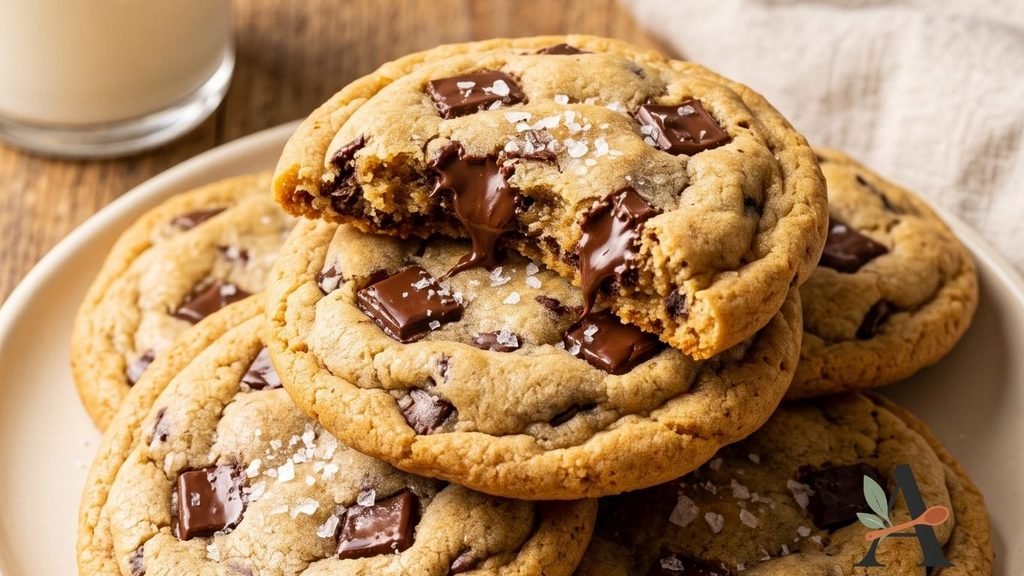
Soft Chocolate Chip Cookies Recipe Card
Preparation time: 20 minutes
Chilling time: At least 1 hour
Cooking time: 10–13 minutes per tray
Total time: Approximately 1 hour 45 minutes
Yield: 16–18 large cookies
Course: Dessert
Cuisine: American
Method: Baking
Ingredients
- ¾ cup unsalted butter, melted and slightly cooled.
- 1 cup packed light brown sugar.
- ½ cup granulated sugar.
- 1 large egg.
- 1 large egg yolk.
- 2 teaspoons vanilla extract.
- 2¼ cups all-purpose flour.
- 1 tablespoon cornstarch.
- 1 teaspoon baking soda.
- ½ teaspoon salt.
- 1½ cups semisweet chocolate chips or chunks.
- Flaky salt, optional.
Instructions
- Melt the butter and allow it to cool for 10–15 minutes.
- Whisk together the flour, cornstarch, baking soda and salt.
- Whisk the melted butter with both sugars.
- Add the whole egg and egg yolk.
- Mix in the vanilla.
- Fold the dry ingredients into the wet mixture.
- Reserve some chocolate for decorating.
- Fold the remaining chocolate into the dough.
- Cover and chill for at least one hour.
- Preheat the oven to 350°F.
- Line baking sheets with parchment paper.
- Portion the dough into three-tablespoon balls.
- Arrange them several inches apart.
- Press the reserved chocolate into the tops.
- Bake for 10–13 minutes.
- Remove when the edges are golden and the centres remain soft.
- Add optional flaky salt.
- Cool on the pan for 5–10 minutes.
- Transfer to a wire rack.
Recipe Notes
- Allow the melted butter to cool.
- Measure the flour accurately.
- Avoid overmixing the dough.
- Chill the dough thoroughly.
- Use cool, ungreased baking sheets.
- Bake one test cookie to check spreading.
- Remove the cookies while their centres remain soft.
- Test the complete recipe before confirming exact baking time and yield.