
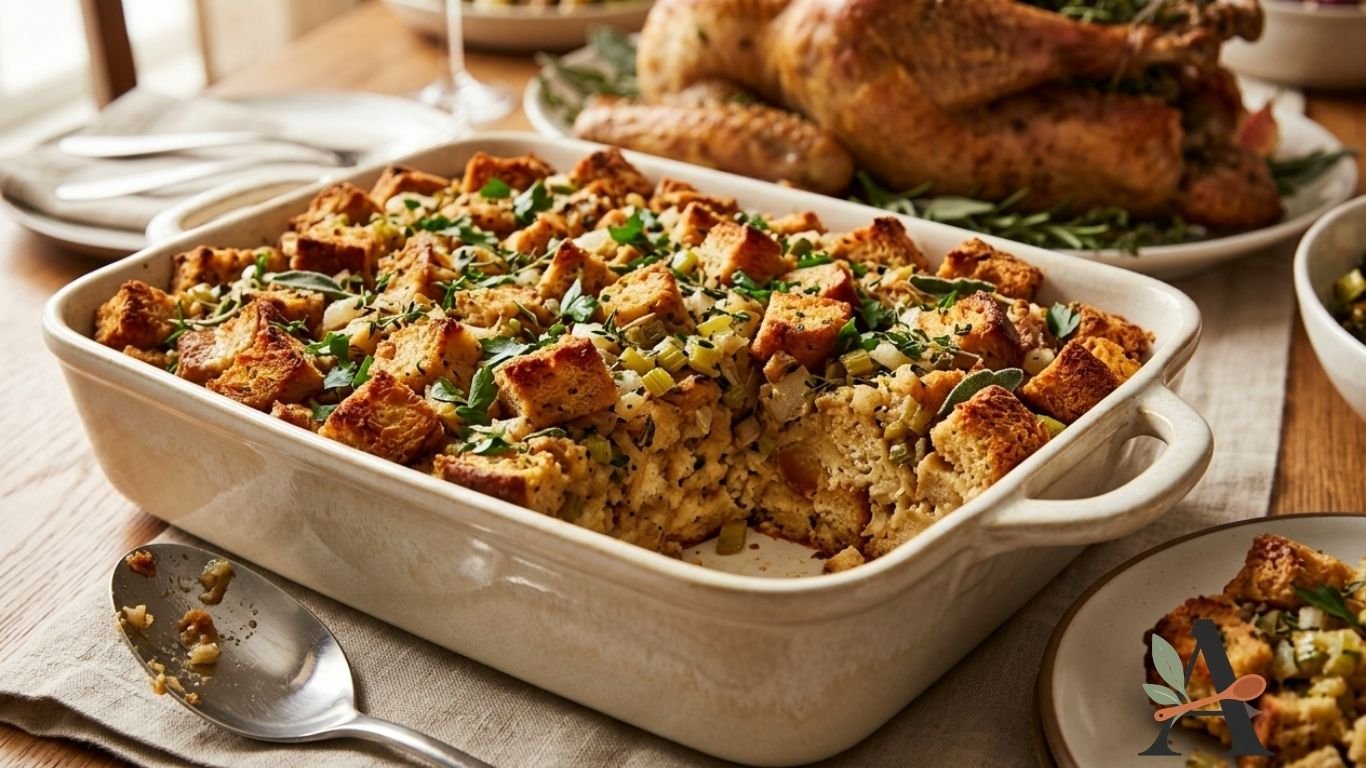
This classic Thanksgiving stuffing has a soft, savoury centre and crisp, golden edges. Dried bread cubes absorb a buttery mixture of celery, onions, stock and traditional holiday herbs.
Baking the stuffing separately from the turkey makes it easier to control its moisture and ensures plenty of crisp topping. It can also be prepared ahead, which saves valuable time on Thanksgiving or Christmas Day.
Serve it with roast turkey, mashed potatoes, gravy, cranberry sauce and your favourite vegetable side dishes.
Why You’ll Love This Stuffing Recipe
- Classic Thanksgiving flavour.
- Crisp top with a moist centre.
- Made with simple ingredients.
- Baked safely in a separate casserole dish.
- Easy to prepare in advance.
- Suitable for Thanksgiving or Christmas.
- Customisable with sausage, mushrooms or apples.
- Uses ordinary sandwich bread.
- Feeds a family or holiday gathering.
- Delicious with turkey and gravy.
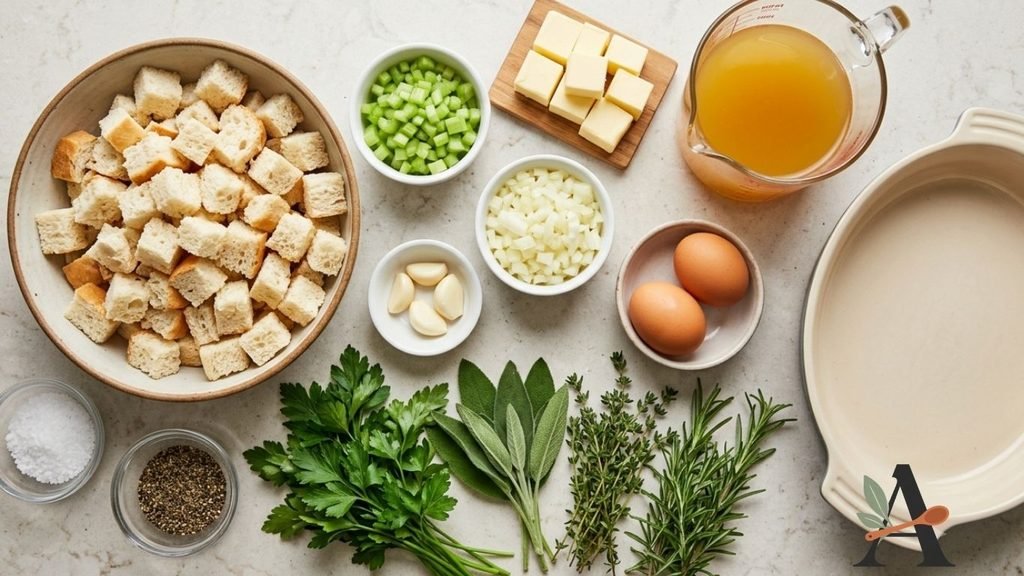
Ingredients You’ll Need
- 1 large loaf sturdy white bread, approximately 16 ounces.
- ¾ cup unsalted butter.
- 1 large yellow onion, finely chopped.
- 4 celery stalks, finely chopped.
- 3 garlic cloves, minced.
- 2 teaspoons dried rubbed sage.
- 1½ teaspoons dried thyme.
- 1 teaspoon dried rosemary, crushed.
- ½ teaspoon poultry seasoning, optional.
- 1 teaspoon salt.
- ½ teaspoon ground black pepper.
- 2¼–3 cups low-sodium chicken stock.
- 2 large eggs, lightly beaten.
- ¼ cup chopped fresh parsley.
- Additional butter for greasing the baking dish.
Ingredient Notes
Bread: Use a sturdy white sandwich loaf, French bread or a combination of white and wholemeal bread. Very soft fresh bread can produce a heavy, pasty texture.
Butter: Butter adds richness and traditional holiday flavour. Unsalted butter allows you to control the final seasoning.
Onion and celery: These vegetables form the savoury base of classic American stuffing.
Garlic: Garlic is optional but adds depth without overpowering the herbs.
Sage: Sage provides the distinctive flavour commonly associated with Thanksgiving stuffing.
Chicken stock: Use low-sodium stock so the salt can be adjusted safely. The quantity required depends on how dry and absorbent the bread is.
Eggs: Eggs help bind the stuffing and give the centre a cohesive texture.
Fresh parsley: Adds colour and a fresh herbal finish.
The Best Bread for Thanksgiving Stuffing
The best stuffing bread is sturdy, mildly flavoured and dry enough to absorb stock without falling apart.
Good choices include:
- Firm white sandwich bread.
- French bread.
- Italian bread.
- Sourdough bread.
- A mixture of white and wholemeal bread.
- Cornbread combined with white bread.
Avoid using only very soft, freshly baked bread unless you dry it thoroughly first.
How to Dry Bread for Stuffing
Overnight Method
Cut the bread into approximately ¾-inch cubes.
Spread the cubes across one or two large baking sheets and leave them uncovered at room temperature overnight.
Oven Method
Preheat the oven to 250°F.
Spread the bread cubes in a single layer across large baking sheets.
Bake for approximately 45–60 minutes, stirring occasionally, until dry but not deeply browned.
Allow the cubes to cool before making the stuffing.
How to Make Thanksgiving Stuffing
Step 1: Prepare the Oven and Baking Dish
Preheat the oven to 350°F.
Grease a 9 × 13-inch baking dish generously with butter.
Place the dried bread cubes in a very large mixing bowl.
Step 2: Cook the Vegetables
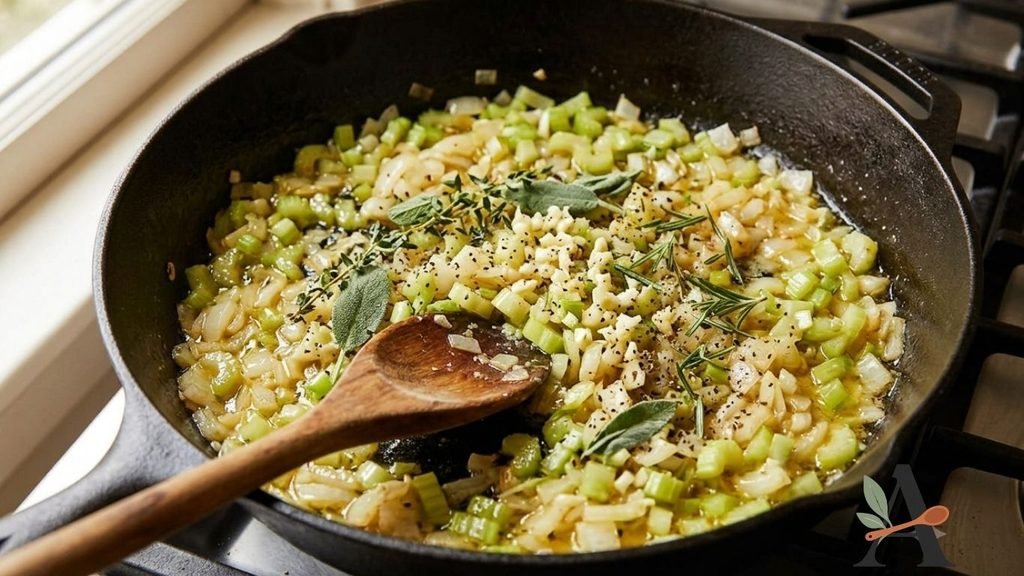
Melt the butter in a large skillet over medium heat.
Add the chopped onion and celery.
Cook for approximately 8–10 minutes, stirring occasionally, until the vegetables are tender but not deeply browned.
Add the garlic and cook for approximately 30 seconds.
Step 3: Add the Herbs
Add the sage, thyme, rosemary, optional poultry seasoning, salt and black pepper.
Cook for approximately one minute, stirring constantly, until the herbs become fragrant.
Remove the skillet from the heat.
Step 4: Combine With the Bread
Pour the buttery vegetable mixture over the dried bread cubes.
Add the chopped parsley and toss gently until the bread is evenly coated.
Allow the mixture to cool slightly before adding the eggs.
Step 5: Add the Stock and Eggs
Whisk the eggs with two cups of chicken stock.
Pour the mixture gradually over the bread while tossing gently.
Add more stock in small amounts until the bread is evenly moistened but not swimming in liquid.
For a softer stuffing, use more stock. For a firmer stuffing with more distinct bread pieces, use less.
Step 6: Transfer to the Baking Dish
Spoon the stuffing into the greased baking dish.
Spread it evenly without compressing it too firmly.
Packing it tightly can produce a dense texture.
Step 7: Bake Covered
Cover the baking dish tightly with aluminium foil.
Bake at 350°F for approximately 30 minutes.
Covering the dish traps moisture and allows the centre to heat evenly.
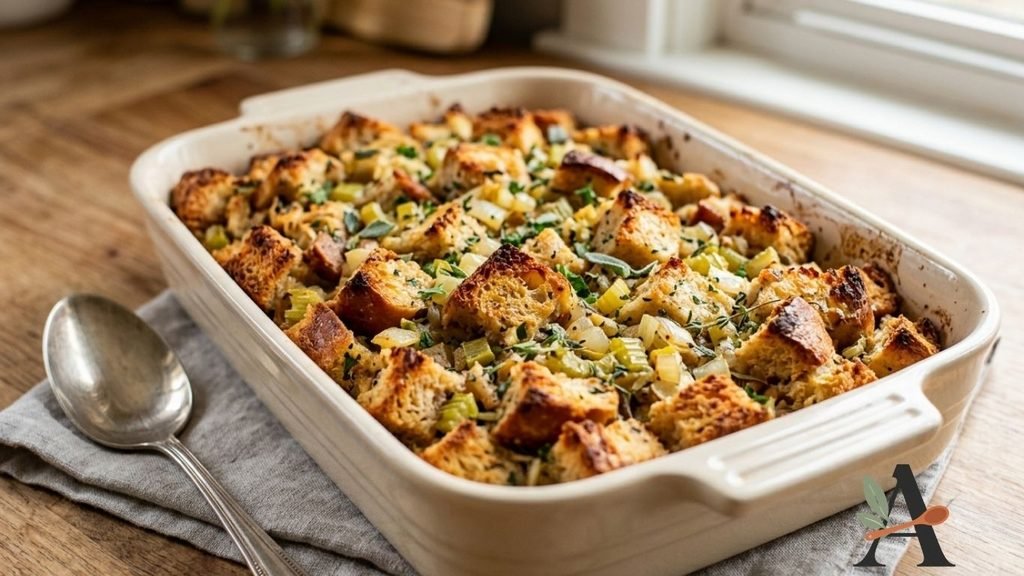
Step 8: Brown the Top
Remove the foil carefully.
Continue baking uncovered for approximately 20–25 minutes, or until the top is crisp and golden and the centre reaches 165°F.
Step 9: Rest and Serve
Allow the stuffing to rest for approximately ten minutes.
Garnish with additional parsley, sage or thyme before serving.
How Moist Should Stuffing Be Before Baking?
The bread should be evenly moistened, but liquid should not pool at the bottom of the bowl.
Take a small handful and squeeze it gently:
- If it immediately crumbles, add a little more stock.
- If it holds together lightly, the moisture is suitable.
- If liquid drips out, the mixture may be too wet.
Different bread varieties absorb different quantities of stock, so add the liquid gradually.
Tips for Perfect Homemade Stuffing
Dry the Bread Properly
Dry bread absorbs the seasoned stock while maintaining its shape. Fresh, moist bread can become mushy.
Cut Uniform Cubes
Similar-sized bread cubes absorb liquid and cook more evenly.
Cook the Vegetables Until Tender
Celery and onion do not soften considerably once mixed into the stuffing, so sauté them properly first.
Add Stock Gradually
It is easy to add more stock, but difficult to remove excess liquid.
Do Not Compress the Mixture
Transfer the stuffing gently to the dish so it remains light rather than dense.
Bake Covered, Then Uncovered
The covered stage keeps the centre moist. Removing the foil creates the crisp top.
Check the Centre
Bake until the middle reaches 165°F, particularly because the recipe contains eggs.
Easy Stuffing Variations
Sausage Stuffing
Cook one pound of mild or sage breakfast sausage until browned.
Drain excess fat and combine the cooked sausage with the bread and vegetable mixture.
Apple and Sage Stuffing
Add two peeled, diced apples to the skillet during the final few minutes of cooking the vegetables.
Mushroom Stuffing
Cook sliced mushrooms separately until their released liquid evaporates, then mix them with the bread.
Cranberry Pecan Stuffing
Add dried cranberries and toasted chopped pecans for sweetness and crunch.
Cornbread Stuffing
Replace half or all of the white bread with dried cornbread cubes. Cornbread absorbs liquid differently, so add the stock gradually.
Bacon Stuffing
Fold cooked, crumbled bacon into the bread mixture before baking.
Vegetarian Stuffing
Replace the chicken stock with low-sodium vegetable stock.
Garlic Herb Stuffing
Increase the garlic and add additional fresh rosemary, thyme and parsley.
Stuffing Versus Dressing
The terms are often used interchangeably in the United States.
Traditionally:
- Stuffing is cooked inside a turkey or chicken.
- Dressing is baked separately in a casserole dish.
However, many people call the baked side dish stuffing regardless of how it is cooked.
This recipe is technically a dressing because it is baked separately, but “Thanksgiving stuffing” is the more familiar search term.
Should You Cook Stuffing Inside the Turkey?
Baking it separately is generally easier and provides more consistent results.
Stuffing cooked inside poultry must reach a safe internal temperature of 165°F. This can make it difficult to cook both the turkey and the stuffing perfectly at the same time.
A separate casserole also creates more crisp, golden surface area.
What to Serve With Thanksgiving Stuffing
Serve it with:
- Roast turkey.
- Turkey gravy.
- Cranberry sauce.
- Baked ham.
- Roast chicken.
- Creamy mashed potatoes.
- Sweet potato casserole.
- Roasted green beans.
- Honey glazed carrots.
- Garlic Parmesan Brussels sprouts.
- Homemade dinner rolls.
- Creamy baked mac and cheese.
For a complete Thanksgiving menu, serve this stuffing with Sweet Potato Casserole With Marshmallows, Creamy Mashed Potatoes, Easy Roasted Green Beans and Homemade Dinner Rolls.
Can You Make Thanksgiving Stuffing Ahead?
Yes. Assemble the stuffing in the greased baking dish, but do not bake it.
Cover tightly and refrigerate for up to 24 hours.
Remove the dish from the refrigerator while the oven preheats. Do not leave it at room temperature for more than necessary.
Bake until the centre reaches 165°F. A chilled casserole may require additional cooking time.
For the best texture, you may also prepare the components separately:
- Dry the bread several days ahead.
- Cook and refrigerate the vegetable mixture.
- Combine everything shortly before baking.
How to Store Leftover Stuffing
Transfer leftovers to an airtight container and refrigerate within two hours.
Use refrigerated stuffing within 3–4 days.
Large quantities should be divided into shallow containers so they cool more quickly.
Can You Freeze Stuffing?
Yes. Allow the baked stuffing to cool completely.
Divide it into portions and transfer it to freezer-safe containers.
Freeze for up to three months for best quality.
Thaw overnight in the refrigerator before reheating.
How to Reheat Thanksgiving Stuffing
In the Oven
Place the stuffing in a baking dish and add a small splash of stock.
Cover with foil and reheat at 350°F until thoroughly hot.
Remove the foil during the final minutes to restore the crisp top.
In the Microwave
Place an individual portion on a microwave-safe plate.
Add a small splash of stock, cover loosely and heat in short intervals until hot.
Reheat leftovers to 165°F.
Frequently Asked Questions
Can I use fresh bread for stuffing?
Yes, but it must be dried first. Fresh bread contains too much moisture and may produce a mushy texture.
Why is my stuffing dry?
The bread may not have absorbed enough stock, or the dish may have baked uncovered for too long. Add stock gradually until the bread is evenly moistened before baking.
Why is my stuffing mushy?
Too much stock, very soft bread or tightly packing the baking dish can create a heavy texture.
Can I make stuffing without eggs?
Yes, but the stuffing will be looser and less cohesive. Additional stock may be required.
Can I use vegetable stock?
Yes. Vegetable stock works well for a meat-free version.
How do I make the top crisp?
Bake the stuffing uncovered during the final 20–25 minutes. A few small pieces of butter placed on top can encourage browning.
Can I add sausage?
Yes. Cook the sausage completely before combining it with the remaining ingredients.
How much stuffing should I make per person?
Plan for approximately ¾ cup per person. Increase the quantity if your guests particularly enjoy stuffing or if you want leftovers.
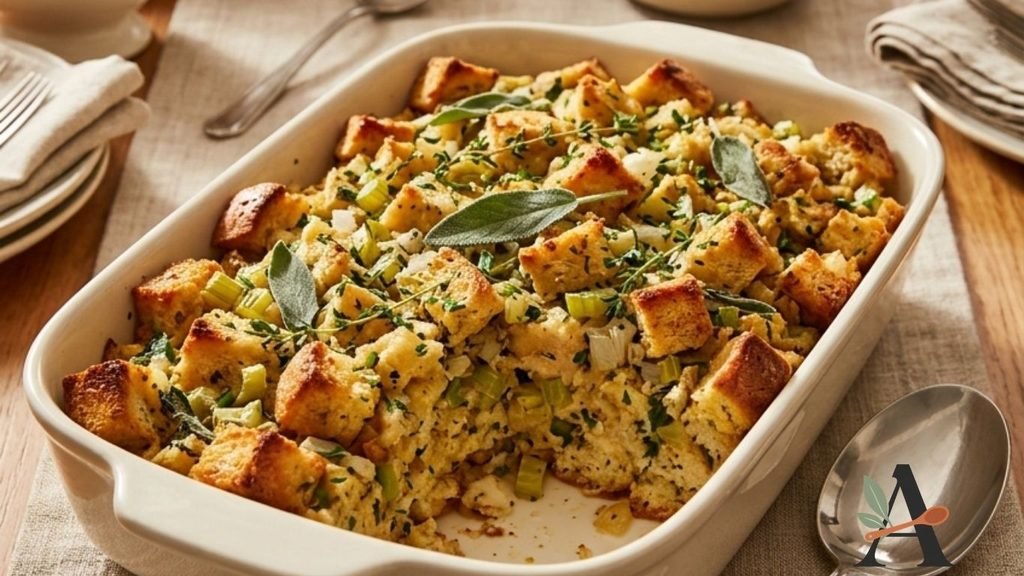
Classic Thanksgiving Stuffing Recipe Card
Preparation time: 25 minutes
Cooking time: 50–55 minutes
Total time: Approximately 1 hour 20 minutes
Servings: 10
Course: Side Dish
Cuisine: American
Method: Baking
Ingredients
- 16 ounces sturdy white bread, cut into cubes and dried.
- ¾ cup unsalted butter.
- 1 large yellow onion, chopped.
- 4 celery stalks, chopped.
- 3 garlic cloves, minced.
- 2 teaspoons dried rubbed sage.
- 1½ teaspoons dried thyme.
- 1 teaspoon dried rosemary.
- ½ teaspoon poultry seasoning, optional.
- 1 teaspoon salt.
- ½ teaspoon black pepper.
- 2¼–3 cups low-sodium chicken stock.
- 2 large eggs, lightly beaten.
- ¼ cup chopped fresh parsley.
Instructions
- Dry the bread cubes overnight or in a 250°F oven.
- Preheat the oven to 350°F.
- Grease a 9 × 13-inch baking dish.
- Place the dried bread in a large bowl.
- Melt the butter in a large skillet.
- Cook the onion and celery for 8–10 minutes.
- Add the garlic and cook for 30 seconds.
- Stir in the sage, thyme, rosemary, poultry seasoning, salt and pepper.
- Pour the vegetable mixture over the bread.
- Add the parsley and toss gently.
- Whisk the eggs with two cups of stock.
- Add the liquid gradually, using additional stock when necessary.
- Transfer the mixture to the baking dish without packing it firmly.
- Cover with foil and bake for 30 minutes.
- Remove the foil and bake for another 20–25 minutes.
- Confirm that the centre reaches 165°F.
- Rest for ten minutes before serving.
Recipe Notes
- Dry the bread thoroughly.
- Use low-sodium stock and adjust the salt to taste.
- Add stock gradually because different breads absorb different amounts.
- Avoid packing the stuffing tightly.
- Bake until the centre reaches 165°F.
- Test the complete recipe before confirming the exact liquid quantity and yield.